LOCKHEED MARTIN UNVEILS THE LAMPREY MMAUV
Drone warfare is the newest revolution in military operations. Defense manufacturers are building robotic craft for every conceivable application, including combat, logistics, and medivac. From cheap disposable drones that drop grenades or make a direct attack, to multi-million dollar semi-autonomous and even fully autonomous aircraft, boats, and vehicles, they are all now a standard feature on modern battlefields.
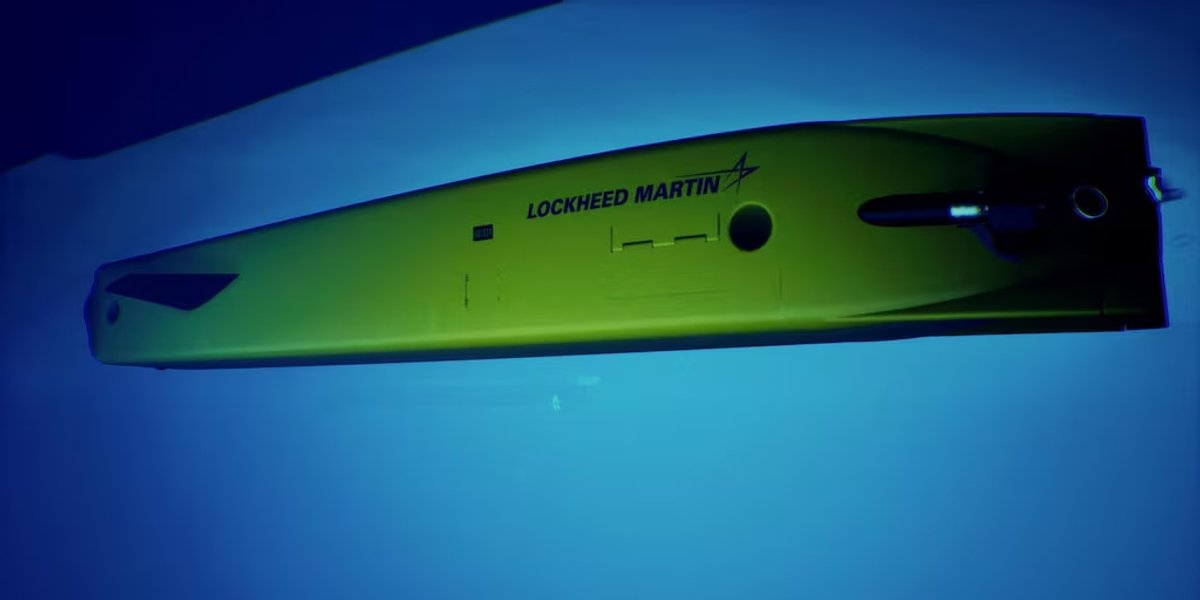
Lockheed Martin has officially unveiled its latest undersea vehicle: the Lamprey Multi-Mission Autonomous Undersea Vehicle (MMAUV). The Lamprey is a modular, autonomous drone designed to redefine naval operations by hitching rides on ships and submarines and entering contested waters stealthily with full energy and mission capability. The name is apt because a lamprey is a jawless, eel-like fish that survives by attaching itself to larger hosts and drawing energy from them, just as the unmanned system is designed to do.
The Lamprey MMAUV represents a departure from traditional long-endurance unmanned undersea vehicles. Rather than expending its own battery power during long transits, the system can attach itself to the hull of a host surface ship or submarine and generate electricity en route using built-in hydrogenerators.
A hydrogenerator is a small propeller attached to a generator that charges the vehicle’s batteries, essentially turning host vessel motion into recharge power while remaining covert. This “hitchhiking” approach allows the vehicle to arrive on station with fully charged batteries and operational discretion without requiring host-platform modifications.

Modular, Multi-Mission Payloads
The Lamprey MMAUV is built around an open-architecture payload bay that offers roughly 24 cubic feet of configurable space, enabling mission tailoring for a wide range of maritime tasks. It can deploy smaller drones, missiles, lay mines, or conduct surveillance.
Lockheed Martin and press accounts cite potential payload options, including:
- Lightweight anti-submarine torpedoes for direct kinetic strike missions.
- Unmanned aerial systems, deployable via internal launchers for ISR (intelligence, surveillance, reconnaissance) or precision engagement.
- Decoys and electronic warfare suites that can confuse adversary sensors or act as acoustic countermeasures.
- Seabed sensors and intelligence packages, enabling persistent monitoring from the ocean bottom.
Stealthy Access, Persistent Presence
Once detached from its host, Lamprey is intended to operate autonomously, conducting missions independently or as part of a larger swarm of unmanned systems.
Its stealthy design and distributed operations concept are aimed at giving commanders new tools for sea denial, assured access, reconnaissance, and target engagement across undersea and surface domains. The Ukrainians have used uncrewed autonomous and remotely piloted naval drones to great success in the Black Sea, essentially destroying or neutralizing the Russian Black Sea Fleet.
Defense News reporting specifically highlights the platform’s ability to operate from the seabed to the surface, enabling both underwater and above-water mission sets. For example, Lamprey can loiter quietly on the ocean floor and later transmit data or launch drones when conditions are favorable.
Strategic Implications for Naval Operations
Lockheed Martin frames Lamprey as a response to evolving maritime competition, particularly where traditional naval assets may be challenged by cost, endurance limitations, or detection risk.
Developed by Lockheed Martin with their own funding, they have rapidly iterated on the maturation of the system. In the same way that robotic aircraft revolutionized reconnaissance, enabling persistent presence at dramatically lower cost than manned platforms, the Lamprey and similar systems could significantly influence future U.S. and allied naval strategy, especially in contested spaces such as the Indo-Pacific.
Suggested reads:
Join the Conversation

Mickey Addison
Military Affairs Analyst at MyBaseGuide
Mickey Addison is a retired U.S. Air Force colonel and former defense consultant with over 30 years of experience leading operational, engineering, and joint organizations. After military service, h...
Mickey Addison is a retired U.S. Air Force colonel and former defense consultant with over 30 years of experience leading operational, engineering, and joint organizations. After military service, h...
Credentials
- PMP
- MSCE
Expertise
- defense policy
- infrastructure management
- political-military affairs
SHARE: