
Back to the Standard: Why the U.S. Naval Academy Reinstated the Female Haircut
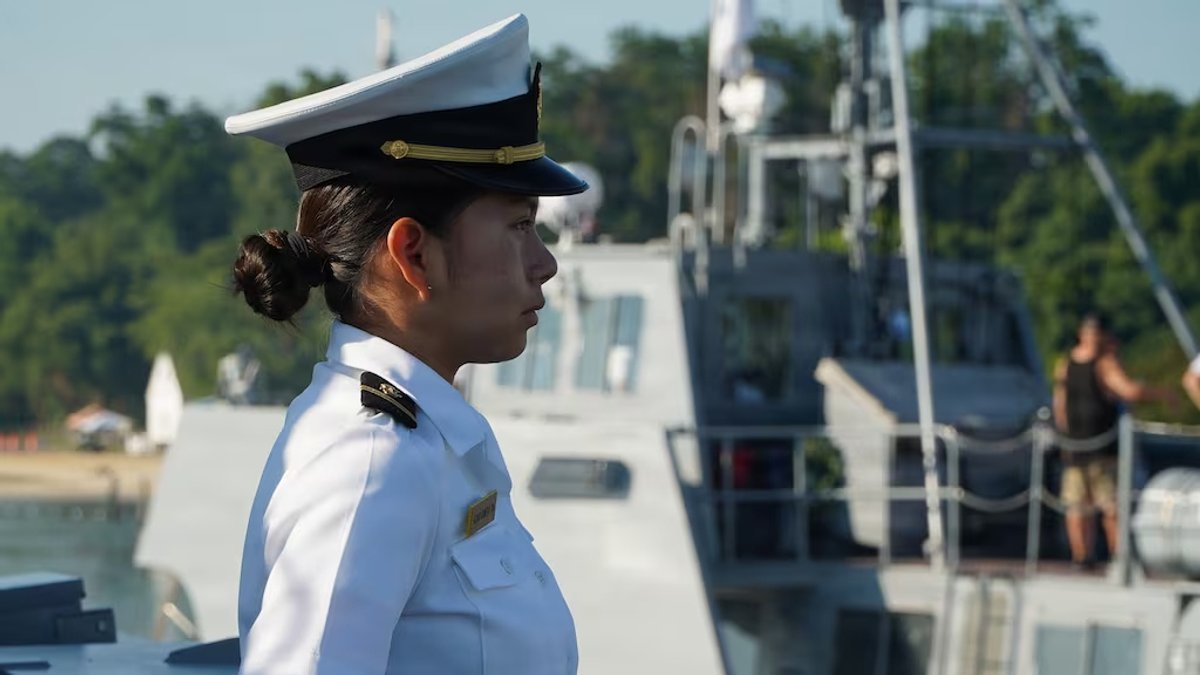
Every summer, more than 1,000 young men and women arrive at the U.S. Naval Academy in Annapolis, Maryland, to begin their Plebe Summer. This grueling program marks the abrupt transition from civilian life to midshipman life.
But for the incoming Class of 2030, Induction Day (I-Day) on June 25, 2026, carried a physical weight that hadn't been felt in several years. The U.S. Naval Academy (USNA) reinstated a controversial requirement: Female students were once again required to report with, or receive, a chin-length haircut.
This policy restored a grooming standard that had been in place for more than four decades before it was abruptly removed in 2019. Here is a deeper look at what the reinstated policy means for female students, the public reaction it has sparked, and the broader implications for military uniformity in the modern era.
What Is the Reinstated Grooming Standard?
Following the reinstated policy, female plebes who arrived on I-Day without meeting the chin-length requirement received a haircut during processing. Male plebes whose hair did not meet academy regulations also received regulation buzz cuts.
“Both male and female midshipmen whose hair did not meet regulations upon arrival received a haircut on I-Day, the day they report to the Academy and begin Plebe Summer,” said LCDR Kara Handley, a U.S. Naval Academy Public Affairs Officer.
I-Day marks the beginning of every Naval Academy student’s journey. Throughout the day, incoming plebes complete a maze of in-processing requirements: administrative paperwork, medical evaluations, equipment distribution, and military orientation.
By the end of the day, they take the Oath of Office and officially begin Plebe Summer; a rigorous six-week training program that prepares them for life in the Brigade of Midshipmen.
“This is a haircut requirement specific to Naval Academy training,” LCDR Handley explained.
“For more than four decades, incoming midshipmen received regulation haircuts on Induction Day as one of the most visible signs of their transformation from civilian to military life.”

The History of "The Chop"
Regulation haircuts have been a staple of military accession training for generations. The expectation applied equally to women when they were first admitted to the Naval Academy in July 1976.
Of the 1,300 new students that year, 81 were women, and all were required to wear short, regulation hairstyles to support a uniform appearance during Plebe Summer.
That requirement remained untouched for 43 years until the academy altered its policy in 2019, allowing incoming female plebes to keep their hair long provided it adhered to the Navy's broader grooming regulations (typically worn in a tightly secured bun). Now, the academy has reverted to its legacy standard.
The Implications: Uniformity vs. Identity
The Naval Academy has been clear that the restored haircut requirement is rooted in tradition and team cohesion. Academy officials stated the policy restores "a common standard so that male and female plebes share the same visible symbol of their commitment to naval service and to the team."
The fundamental implication of this change is a return to "Day 0" humility. The military relies on stripping away civilian individuality to build team reliance. When the policy was removed in 2019, an aesthetic divide was created on I-Day: male plebes were visibly altered by a shaved head, while female plebes were allowed to maintain a significant piece of their civilian identity.
Reinstating the haircut forces a shared vulnerability. The haircut marks the exact moment when civilians begin setting aside personal preferences and aesthetics to embrace the expectations of future Navy and Marine Corps officers.
There is also a highly practical implication: hygiene and time management. During Plebe Summer, midshipmen are subjected to constant physical training in the sweltering Maryland humidity. They are given mere minutes to shower and change.
As noted by former midshipmen, maintaining long hair in a tightly wound bun with no time to dry can lead to hygiene issues, including fungal infections, while short hair significantly cuts down on daily maintenance.
What Are People Saying?
The abrupt return of the policy has prompted mixed reactions across service academy forums, social media, and alumni networks. Some praised the return to standard tradition, while others criticized the timing and delivery of the mandate.
The Alumni Perspective
Julie Kubal, a 1996 Naval Academy graduate, noted that while the haircut was just an expected "rite of passage" during her era, she understands why today's incoming class might feel blindsided.
“In the current environment, where the standards are being questioned, this one in particular may seem like a regression, especially in light of what else is going on,” Kubal told Task & Purpose.
“It's kind of like the cherry on top, like add insult to injury to take something away. But I also think as much as it was a non-issue for me to get my hair cut, and that was what all the women had been doing for all the years before me, and for so many years after me.”
Lt. Cmdr. Kellie Sbrocchi, an active-duty Navy officer and academy graduate, took to Instagram to validate the emotional toll the haircut can take on young women.
“I remember sitting in that salon chair, feeling sick to my stomach as I watched my hair hit the floor,” Sbrocchi said.
“This is your first test, not because the Naval Academy wants you to hate your haircut, but because it's about learning that you are more than your comfort zone and more than your appearance and more than the things that you think define you.”
The Parent and Forum Response
Reactions from parents of the Class of 2030 highlight frustration over how late the policy change was communicated. One mother expressed disappointment in the sudden policy shift just weeks before I-Day, calling it a "bait and switch."
Another raised the concern that short hair during physical training might actually be more frustrating, as it can get "hotter, sweatier, [and] glued to their faces."
However, other former graduates have defended the practical realities. One explained,
"During plebe summer, long wet hair (which doesn't have the opportunity to dry being pulled back) is prone to literal mold/fungus. The plebe summer haircuts are arguably also a unifying experience... male and female alike."

The Navy’s Everyday Grooming Standards
It’s important to separate this academy-specific indoctrination rule from the broader U.S. Navy. The reinstated chin-length policy applies only to incoming plebes.
Once Plebe Summer concludes, female midshipmen fall under standard Naval grooming regulations. The current Navy policy allows women to wear various hairstyles (including buns, ponytails, braids, twists, and locks) as long as they maintain a professional appearance and do not interfere with the proper wearing of headgear or safety equipment.
What Comes Next
The return of the chin-length haircut may have been the most visually striking moment of this year's Induction Day, but military leaders emphasize that it is merely a stepping stone.
Long after Plebe Summer ends and the hair grows back, the academy's focus shifts to the resilience built and the leadership developed.
As Sbrocchi reminded the incoming class, "One day, you’ll look back at that chin-length plebe haircut and laugh, because you’ll then realize it was such a small chapter in a much bigger story."
Continue Reading

Pentagon Fires Stars and Stripes Editor, Publisher and Reporter Amid Widening Press Restrictions

What Happens to Your Pet After a PCS: Health and Behavior Changes to Watch For

Trump Orders Navy to Rip Out Electromagnetic Catapults on Next Ford-Class Carrier
Join the Conversation

Allison Kirschbaum
Veteran, Military History & Culture Writer at MyBaseGuide
Allison Kirschbaum is a Navy Veteran and an experienced historian. She has seven years of experience creating compelling digital content across diverse industries, including Military, Defense, History...
Allison Kirschbaum is a Navy Veteran and an experienced historian. She has seven years of experience creating compelling digital content across diverse industries, including Military, Defense, History...
Credentials
- Navy Veteran
- 7 years experience in digital content creation
- Expertise across Military, Defense, History, SaaS, MarTech, FinTech industries
Expertise
- Military History
- Naval Operations
- Military Culture
SHARE: