New Frontline Tech Aims to Detect TBIs in Minutes, Revolutionizing Treatment
At first, it can feel like ‘no big deal.’ A blast lands close enough to register, but not in a way that stops you from doing anything. There’s no visible injury, and no reason to step away. The service member steadies, runs through the usual checks, answers when asked, and keeps going. The moment passes without notice because there is nothing obvious to mark it. Things happen, and you’re either hurt or injured; and if you’re not injured, suck it up and keep it moving. That’s the ‘military way.’
The pressure hits, and you move on. What happens next might not show up until years later, in ways that are easy to dismiss. A headache that alleviates, but never truly goes away, focus that slips in small, uneven ways, sleep that just doesn’t feel the same, or memory that hesitates where it didn’t before. None of it clearly points back to that moment, and without that connection, there is often nothing recorded in your medical history.
Traumatic brain injury in the military has been tracked largely after the fact, not at the moment it occurs. The Department of Defense reports tracking more than 500,000 traumatic brain injuries since 2000, according to an official release.
Those cases were diagnosed and entered into the system. The number reflects what was identified, but that doesn’t include incidents that were never formally connected to a brain injury when they happened. That separation has defined how these injuries are documented, or not.
A Diagnosis That Didn’t Start at the Scene
The Defense Health Agency states that symptoms associated with traumatic brain injury can be subtle and may not appear immediately, particularly in operational environments where attention remains fixed on the mission. In that setting, an injury does not always interrupt activity in a way that forces recognition.
Military Benefits Eligibility Checker
Answer a few questions to discover which military and VA benefits you or your family may be eligible for.
10 questions • Takes about 2 minutes
A service member can respond clearly, move without limitation, and continue working after an incident. Initial checks depend on observation and self-reporting in a narrow window where nothing appears urgent. More advanced evaluation typically occurs later, once the individual reaches higher levels of care where imaging and full neurological assessment are available.
That chain of events potentially places a significant distance between the event and the diagnosis. The record begins later, shaped by timing and access rather than the moment the injury occurred.

A Program Built for the First Minutes
The Pentagon is testing a system designed to move that first point of assessment forward through the Traumatic Brain Injury Field Assessment Program, developed under the Defense Health Agency. The DoD describes the effort as a way to assess potential brain injuries at or near the point of injury, where the event is still clear, and decisions are being made.
“The Traumatic Brain Injury Field Assessment Program aims to provide medical personnel with tools to assess and detect brain injuries at or near the point of injury,” the department said.
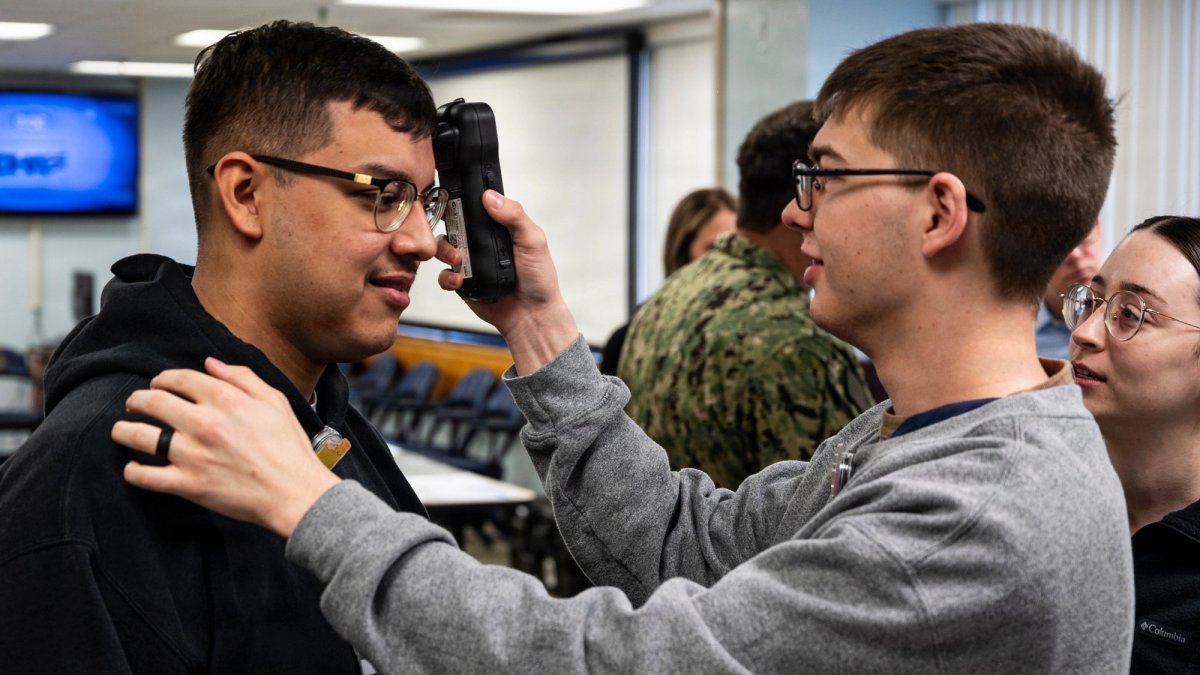
The program combines a portable device capable of detecting intracranial hemorrhage with an application that guides medical personnel through a structured evaluation in the field.
It “integrates technologies, including a device that can detect intracranial hemorrhage… and a tablet-based application that guides providers through assessment of TBI,” according to the same release.
These tools are designed for use by medics and frontline providers operating in environments where time is limited, conditions are unpredictable, and where decisions are made without the benefit of full clinical resources.
This system is still in development. The Defense Health Agency is conducting evaluations with clinicians and medics, placing the tools into realistic conditions to assess how they function in real-world scenarios. These sessions, described as “end-user touchpoints,” are being used to refine usability, reliability, and how the system fits into existing workflows.

What the System Is Positioned to Capture
Traumatic brain injuries do not always present in ways that force immediate attention. They can occur without visible injury and without symptoms that interrupt activity.
That has made them difficult to identify at the moment they happen, particularly in environments where operational demands take priority. The field assessment program focuses on that initial window, when an event has just occurred, and decisions about continued activity or care are being made. It introduces tools intended to support that process with structured evaluation and data collected in real time.
Is this finally where the record starts changing? For years, documentation often started after the event had already passed, when details were less precise, and the connection to a specific incident could be harder to establish. This program places that starting point closer to the incident itself, where the sequence of events is still intact and can be captured as they occur.
The conditions that produce these injuries have not changed. Training environments remain high risk, and operational environments continue to expose service members to blast and impact. The effort underway focuses on whether that first moment can be recorded while the details of what happened are still clear.
Continue Reading
Navy Pledges $1.7 Billion to Modernize Unaccompanied Sailor Housing
Baseball Caps and Collar Ranks: Army Considers First Major Uniform Update in Years
Faster Benefits, Better Jobs: New Executive Order Aims to Streamline Military Transitions
Join the Conversation

Natalie Oliverio
Veteran & Senior Contributor, Military News at MyBaseGuide
Natalie Oliverio is a Navy Veteran, journalist, and entrepreneur whose reporting brings clarity, compassion, and credibility to stories that matter most to military families. With more than 100 publis...
Natalie Oliverio is a Navy Veteran, journalist, and entrepreneur whose reporting brings clarity, compassion, and credibility to stories that matter most to military families. With more than 100 publis...
Credentials
- Navy Veteran
- 100+ published articles
- Veterati Mentor
Expertise
- Defense Policy
- Military News
- Veteran Affairs
SHARE: