GOOGLE BEAM IS HEADED TO USO CENTERS. HERE’S WHAT MILITARY FAMILIES SHOULD KNOW
Any person who has spent time away from loved ones understands how extremely important phone calls and communication are. Distance may make the heart grow fonder, but every day apart can feel like eternity before you see, or talk to one another again.
At some point in every deployment, calls with loved ones start to feel stagnant, flat, more routine, less connected, and don’t necessarily offer the quality time or comfort you need. Maybe calls come in less frequently, or the air space is just thinner, and there’s not much to say. A lot of times, this is a sign of longing and despair. A form of living grief from missing your person mixed with the pressure to “make it work,” while separated, because time to talk is so limited, even when it really isn’t “working,” for you.
You’re still talking. You’re still seeing each other over FaceTime or video chat. But something about it reminds you, over and over again, that the person you love is not in the room. That’s where longing comes from. That painful realization that what you want cannot be had, not in its full form.
For decades, military families have adapted around that gap. Letters, phone cards, lagging video calls at odd hours, it all works, but it never fully replaces presence.
That’s the gap Google says it’s trying to close with Google Beam.
In October 2025, Google announced a partnership with the United Service Organizations (USO) to bring its 3D video communication platform to select USO centers, with rollout beginning in 2026. Officials working with Google Beam said the goal is to help deployed active-duty service members feel more present with their families during separation.
That’s the promise.

What Google BEAM Is, and What It Isn’t
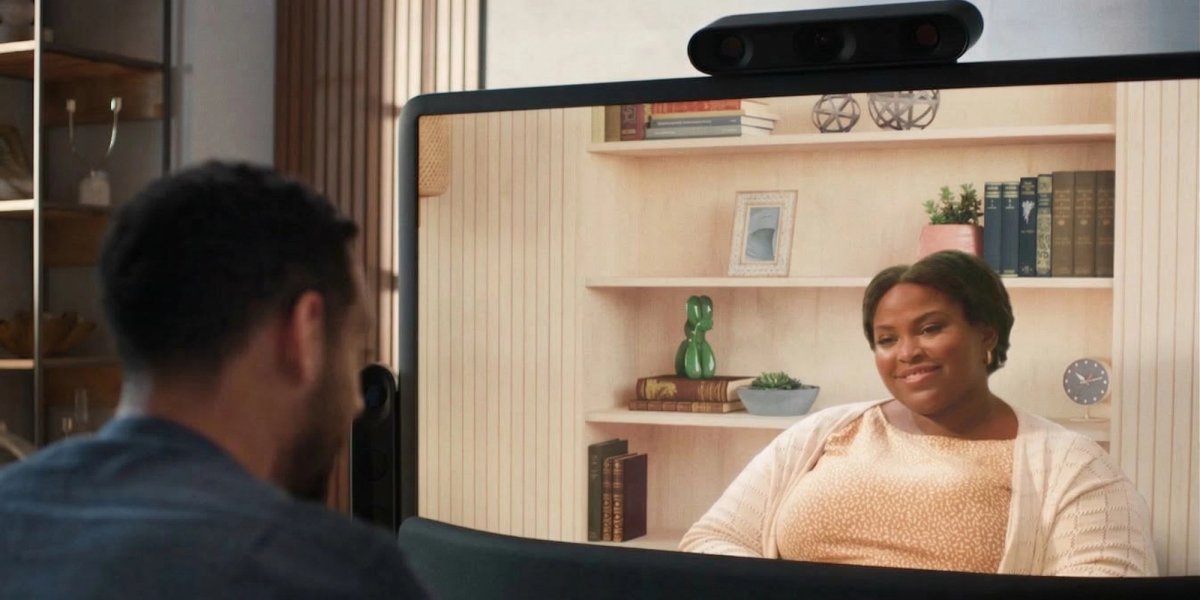
Google Beam (formerly Project Starline) is not an app, a phone feature, or a consumer video platform. It is a hardware-based communication system that uses multiple cameras, AI processing, and a 3D light-field display to create a life-size, three-dimensional image of the person on the other end.
At Google I/O 2025, the company said Beam uses six cameras, real-time AI rendering, and millimeter-level head tracking at 60 frames per second to create depth and natural eye contact. The result is designed to feel less like a screen and more like sitting across from someone in real life.
Google says Beam is not available on phones or laptops, it isn’t downloadable or currently available for home use via headset or VR system. Google describes Beam as an early-access enterprise platform, not a consumer product - yet.
Why the USO Partnership Is Significant
Google did not choose the USO randomly. The partnership is built around a very specific use case: on deployment separation. In its official announcement, Google said Beam could allow service members to wish a family member happy birthday, read a book to their child, or share everyday moments that typically don’t translate well over video.
The USO’s role here is well-positioned as it already operates physical locations worldwide where service members and families connect. Beam systems will be placed inside select USO centers, not distributed broadly to individuals.
Where This Is Rolling Out and What “Pilot” Actually Means
Google has confirmed that the rollout will begin this year in select locations at USO centers in the U.S. and overseas. The pilot audience is deployed active-duty service members and their families.
A list of participating USO locations has not been released to date, nor has the number of systems expected to be delivered to various USO locations.
We will continue monitoring updates that indicate an extended timeline expansion, dates, access, and availability when determined, as this is not a network-wide USO rollout - at least not yet.
Who Can Use Google Beam Through the USO?
Google Beam is one of the most advanced attempts yet to make remote communication feel less like a screen and more like shared space. Google and the USO have confirmed that military families, specifically those navigating deployment, are among the first groups expected to use it starting in 2026.
Google has specifically designed this pilot intended for deployed active-duty service members and their families. There is no public indication that any other demographic would be included in the pilot phase.
Military families are already experts at long-distance communication. What Beam is testing is not whether communication is possible, but whether it can feel more natural, less mediated, and less emotionally distant.
That claim has not yet been proven at scale and while the access model is still limited, the goal of closing the distance for service members deployed, and their families, is a meaningful step in the right direction that brings military families worldwide a little more hope for what’s to come.
Suggested reads:
Join the Conversation

Natalie Oliverio
Veteran & Senior Contributor, Military News at MyBaseGuide
Natalie Oliverio is a Navy Veteran, journalist, and entrepreneur whose reporting brings clarity, compassion, and credibility to stories that matter most to military families. With more than 100 publis...
Natalie Oliverio is a Navy Veteran, journalist, and entrepreneur whose reporting brings clarity, compassion, and credibility to stories that matter most to military families. With more than 100 publis...
Credentials
- Navy Veteran
- 100+ published articles
- Veterati Mentor
Expertise
- Defense Policy
- Military News
- Veteran Affairs
SHARE: