DSN Dialing Instructions: Your Go-to Guide to Calling Out

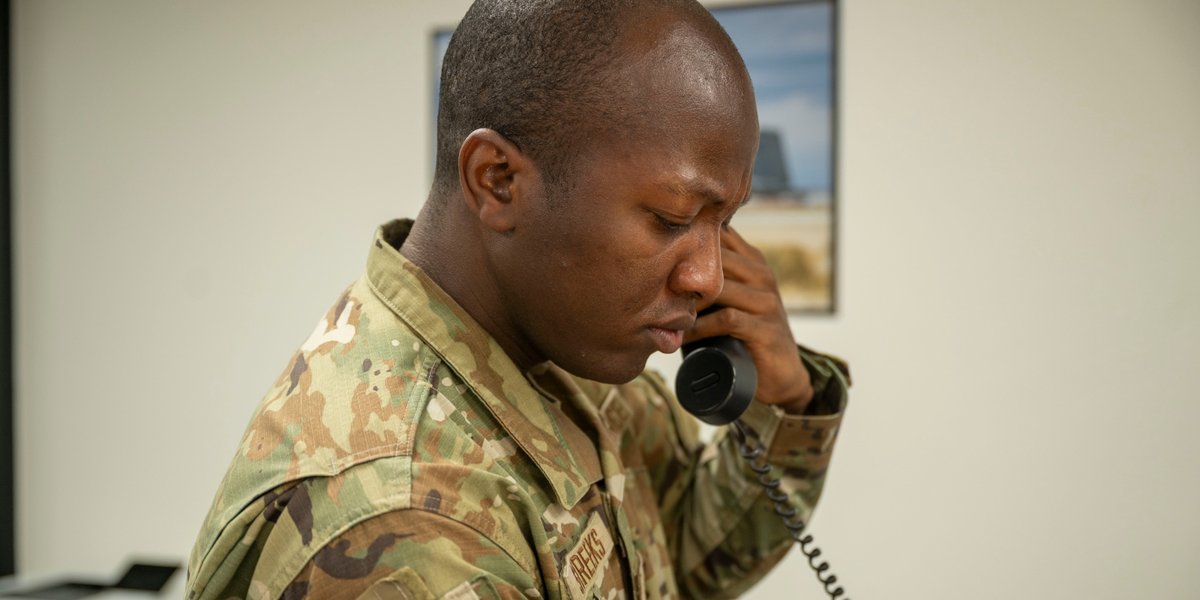
If you’re trying to call a unit across base, reach housing, schedule medical, or talk to your deployed spouse’s command, you’ll eventually run into Defense Switched Network (DSN) numbers. They don’t work like cell phones. They follow base-specific access codes, DSN area codes, and host-nation rules when you’re overseas. What connects easily at Fort Bragg may fail at Camp Humphreys without the right pattern.
Service members need accurate DSN dialing instructions because it's part of daily military life. Using the wrong access code wastes time, blocks communication, and forces families to rely on personal cell plans to solve official problems.

Why DSN Works Differently Than Commercial Calling
The Defense Switched Network (DSN) is the Department of Defense’s secure voice network for official communication across U.S. and allied installations. It stays operational during high traffic, outages, or degraded civilian infrastructure, which is why:
- You must be on a DSN-capable military phone
- Cell phones cannot dial DSN directly
- Breakout to commercial lines is controlled by installations
- DSN uses regional codes, not civilian area codes
This difference shapes everything from appointment scheduling to command communication.
DSN Area Codes (2026)
DSN uses region codes instead of civilian area codes. The ones service members actually encounter:
- 312 — CONUS & Puerto Rico
- 313 — Caribbean
- 314 — Europe (EUCOM)
- 315 — Pacific (INDOPACOM)
- 317 — Alaska
- 318 — CENTCOM (Southwest Asia)
- 319 — Canada
Directories often show DSN as 314-XXX-XXXX or 315-XXX-XXXX, but dialing formats depend on the access code at your installation.
Base Calling and CONUS DSN Dialing
If you’re calling someone on the same base, you often only need the extension.
For CONUS-to-CONUS DSN calls, many installations use:
- 94 + seven digits (dropping 312)
- 94 + 312 + seven digits (global format)
Example: a DSN listed as 312-574-2726 may dial as:
- 94-574-2726 within CONUS, or
- 94-312-574-2726 globally
Note: Installations control their own access codes, so “94” is common but not universal.
Calling Civilian Numbers From DSN (CONUS)
Civilian dialing from government phones is where most confusion happens.
Common patterns across many installations:
- Local/CONUS civilian: 99 + area code + number
- International civilian (with authorization): often 98 + 011 + country code + city code + number
Recent base phone upgrades have standardized 99 for most CONUS calls. 98 is still used at many installations for international dialing, where approved.
Why this matters: breakout permissions are tied to funding and OPSEC, so the class of service on each phone matters.
OCONUS DSN & Civilian Dialing: What Changes When You’re Overseas
Once you PCS OCONUS, dialing complexity jumps. DSN remains consistent through its regional prefixes, but civilian systems are shaped by host-nation telecom rules.
This affects:
- Medical scheduling
- Housing and landlord calls
- School enrollment
- Embassy/consulate communication
- Command duty contact
Europe (USEUCOM / 314)
Most European bases use the 314 DSN region.
Civilian differences include:
- Country codes replace U.S. area codes
- City/region codes vary by location
- Leading zero rules apply (keep domestically, drop internationally)
- DSN and commercial equivalents are routine
Example format principles (not personal numbers):
- Germany local: 0XX-XXXXXXX
- From outside Germany: +49 XX XXXXXXX
Commercial breakout from DSN lines follows local base rules (often 99), not universal standards.
Pacific (INDOPACOM / 315)
Japan, South Korea, Guam, and Hawaii all use 315 on DSN. Civilian systems differ by country.
Verified patterns from installation dialing instructions:
Japan
- Local civilian dial formats vary by city/mobile
- International dialing may require dropping leading zeros after +81
South Korea
- DSN → civilian commonly uses 99
- Civilian → DSN uses designated prefixes (e.g., 0503/05033 formats)
Again, 315 is consistent on DSN, but civilian rules are country-specific.
CENTCOM & Middle East (318)
CENTCOM-region dialing uses 318 but adds operational constraints:
- Commercial breakout may be restricted
- International calling often requires authorization + PINs
- Units rely on DSN, VoIP, and local SIMs for morale calls
This is a communications policy shaped by OPSEC and cost, not convenience.
Leading Zero Rules (OCONUS)
Europe and parts of Asia use leading zeros domestically:
- Domestic: 0 + city/mobile + number
- International: +country code + city/mobile (no 0) + number
This matters for:
- Landlords
- Schools
- Medical providers
- Deliveries and ride-share apps
It is one of the top failure points for newcomers.
Commercial Breakout Authorization (OCONUS)
OCONUS breakout depends on:
- Command policy
- Phone class (desk, VoIP, shared)
- OPSEC restrictions
- Host-nation agreements
- Funding
This is why newcomer packets often state:
- “Dial 99 before civilian numbers.”
- “Do NOT accept collect calls on DSN lines.”
- “Use commercial equivalent for civilian communication.”
This guidance keeps the network secure and costs controllable.
Why Calls Fail (and How to Fix It)
Common issues:
- Using a cell phone for DSN
- Wrong access code
- Wrong DSN region
- Incorrect international format
- Leading zero errors
- No breakout authorization
Best fixes:
- Check the base phone directory
- Call the base operator
- Review newcomer materials
- Confirm line permissions
These are faster and more reliable than trial-and-error dialing.
Continue Reading
Civil Rights Groups Sue Pentagon to Release Records on Women in Combat Roles
Understanding VEERP: The USMC’s 2026 Early Separation Program Explained

Why the US Is Weighing MOAB Deployment in Iran After the Midterms
Join the Conversation

Natalie Oliverio
Veteran & Senior Contributor, Military News at MyBaseGuide
Natalie Oliverio is a Navy Veteran, journalist, and entrepreneur whose reporting brings clarity, compassion, and credibility to stories that matter most to military families. With more than 100 publis...
Natalie Oliverio is a Navy Veteran, journalist, and entrepreneur whose reporting brings clarity, compassion, and credibility to stories that matter most to military families. With more than 100 publis...
Credentials
- Navy Veteran
- 100+ published articles
- Veterati Mentor
Expertise
- Defense Policy
- Military News
- Veteran Affairs
SHARE: