The Air Force Just Rewrote Its Uniform Rules. Here’s Why It Actually Matters.

On June 15, 2026, the Department of the Air Force released an implementation memo that, on the surface, addressed two seemingly unrelated topics: what chaplains wear on their chests and what pregnant Airmen wear to formal ceremonies. But taken together, these two uniform changes tell a much larger story — one about identity, inclusion, and what the Air Force believes it means to serve.
In a single document, the DAF signaled both a philosophical shift in how it views the role of its spiritual leaders and a long-overdue investment in the women who carry the next generation of Airmen while continuing to serve. The uniform changes have never been just about clothing. It is a visual language, a system of symbols that tells the world who you are, what you stand for, and where you belong in the hierarchy of service. These two changes rewrite critical sentences in that language, and the implications reach far beyond the fabric.
The Chaplain's Cross and the Question of Rank
A Change Three Centuries in the Making
Military chaplains have been part of the American armed forces since before there was an America. On July 29, 1775, the Continental Congress authorized one chaplain for each regiment of the Continental Army, with pay equal to that of a captain. These early chaplains wore no rank and were simply men of faith embedded with men of war.
From then through 1914, chaplains served without rank or rank insignia. It was only in 1926 that the modern tradition of visibly wearing an officer rank on the uniform was standardized. For 100 years, chaplains have, as North American Mission Board executive director Doug Carver put it, "visibly, and humbly, worn the insignia of rank on their uniform."
That century-long tradition has ended.
Hegseth's Vision: Chaplain First, Officer Second
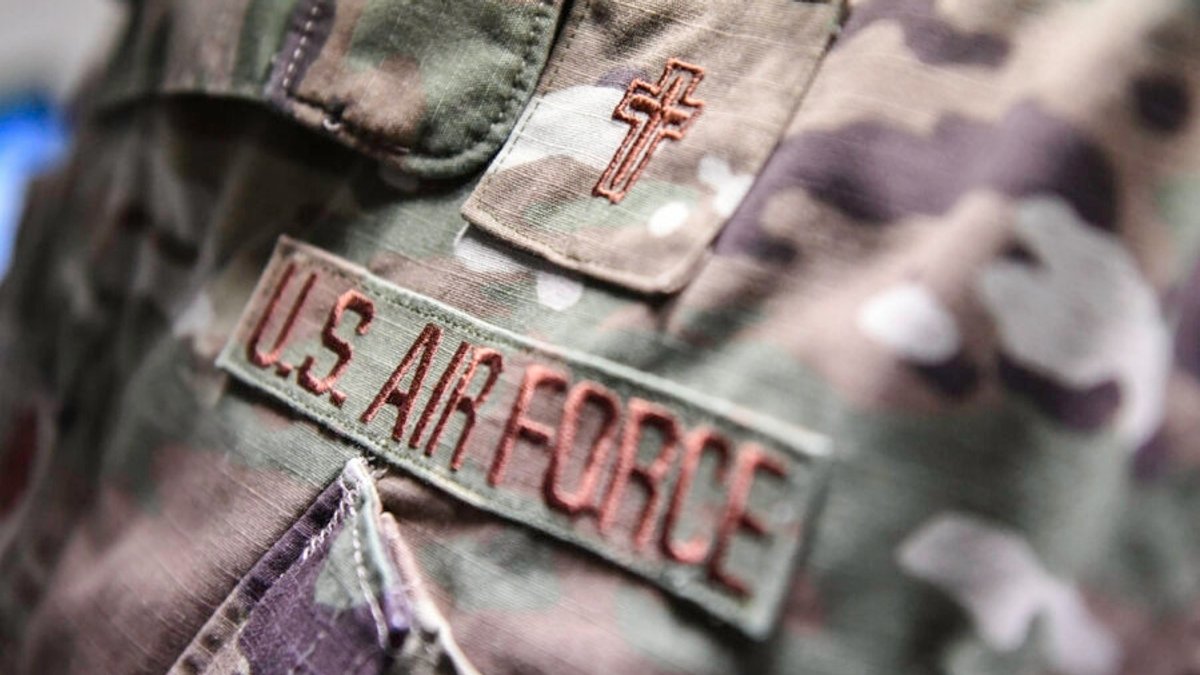
In March 2026, Secretary of Defense Pete Hegseth announced that military chaplains across all branches would replace their officer rank insignia on working and utility uniforms with the appropriate faith insignia representing their religious affiliation. The announcement came with unmistakably direct language from Hegseth,
"A chaplain is first and foremost a chaplain, and an officer second. This change is a visual representation of that fact.”
Hegseth framed the change in both theological and practical terms. Spiritually, he stated that chaplains are "first and foremost called and ordained by God. And, while they will retain rank as an officer to those they serve, their rank will not be visible.”
Practically, he noted that removing visible rank would make chaplains more approachable to junior enlisted personnel who might otherwise hesitate to seek guidance on sensitive personal issues: struggles with faith, mental health, family, or the moral weight of combat.
The reform is part of Hegseth's broader effort to reorient the Chaplain Corps toward what he describes as its original, spiritual mission. When asked about the future, Hegseth stated,
“These two reforms are big progress, but we're not even close to being done. These are the first steps toward restoring the esteemed position of chaplain as moral anchors of our fighting force.”
When further questioned about the insignia change, Hegseth gave his reasoning, stating,
“This reform is intended to uplift and celebrate the chaplain’s role as a chaplain. It also removes any unease or anxiety junior officers or enlisted personnel may have in approaching an officer, potentially a senior officer, for guidance on sensitive matters such as addiction, relationships, or struggles with faith.”
Earlier this month, at the direction of Hegseth, the Department of Defense reduced the military's religious affiliation code system from more than 200 categories to 31, eliminating what he called an "impractical and unusable" system in which 82% of religious service members identified with just six categories.
What Changes and What Doesn't in the DAF
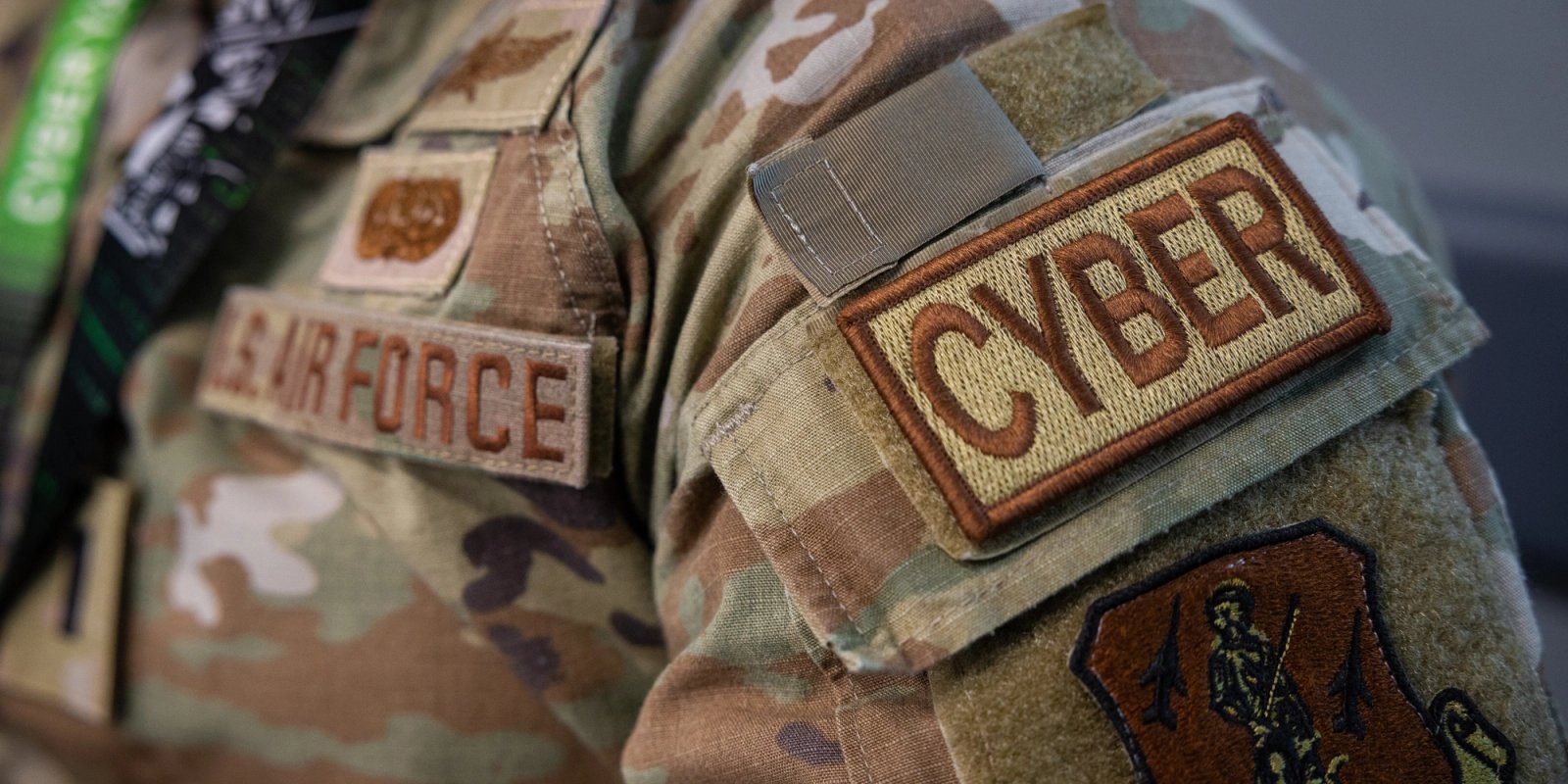
The June 15 DAF implementation memo translated the broad DoD directive into Air Force-specific guidance. Effective immediately, DAF chaplains are required to wear the chaplain insignia in lieu of officer rank insignia on:
• The chest of the Operational Camouflage Pattern (OCP) uniform
• The patrol cap
• The tactical cap
• Outer garments worn with OCPs
Critically, there is no change to the service dress uniform. Chaplains will continue to wear rank insignia in their blues, preserving the traditional appearance at formal and ceremonial occasions.
Navigating the Salute: New Guidance on Old Customs
The most immediately practical question raised by this change is also the most quintessentially military: who salutes whom, and when?
Principal Deputy Assistant Secretary Brian Scarlett addressed this directly, stating,
"Removal of rank insignia from OCP uniform does not alter established customs and courtesies."
What changes is the visual cue used to identify who initiates the salute and not the underlying obligation.
The DAF has outlined a practical framework for navigating these interactions:
Officer-to-Chaplain ("When in Doubt, Salute")
If the rank of one party cannot be visually determined, standard military courtesy calls for a mutual exchange of salutes and a verbal greeting.
Enlisted-to-Chaplain Interactions
Because all military chaplains are commissioned officers, enlisted personnel and NCOs will use the chaplain insignia itself as the visual cue to initiate a salute, regardless of the chaplain's specific grade.
Day-to-Day Unit Settings
At the wing or delta level, personnel are generally expected to already know their chaplain and their rank through prior acquaintance. In these settings, the junior member initiates the salute based on that prior knowledge.
When Rank Must Be Formally Established
Verbal introductions and standard address protocols apply. Chaplains may be addressed by their military rank (e.g., "Good morning, Major Smith") or by the title "Chaplain." Both are equally appropriate under DAF customs.
The Unique Angle: A Tension Between Identity and Approachability
The chaplain uniform change presents an institutional paradox. On one hand, the military is a hierarchical institution in which rank is the foundational organizing principle. On the other hand, the chaplain's mission is fundamentally about relationships and accessibility. A lance corporal or an airman first class struggling with suicidal ideation, grief, or crises of conscience may be far less likely to seek help from someone visually identified as a lieutenant colonel than from someone whose uniform speaks first to their spiritual calling.
Critics, including former Air Force Chief of Chaplains and retired Maj. Gen. Steven Schaick has pushed back, arguing that effective chaplains have always been able to hold both identities simultaneously without one undermining the other, stating,
"You’re both an officer and the chaplain at the same time, and one gives credibility to the other.”
He explained that removing the rank would effectively downgrade the chaplain’s position, suggesting,
“If we’re not officers, then why do we go through officer training? Why do we spend so much time teaching customs and courtesies and making sure that chaplains adhere to them?"
The tension is real, and uniform reform rarely happens in isolation. In fact, it reflects a broader argument about institutional values. In this case, the argument is that spiritual readiness deserves its own visual priority.

The Maternity Wrap Dress Comes After Three Decades of Waiting
The story of the Air Force maternity wrap dress is, at its core, a story about institutional neglect and a hard-won correction. For more than 30 years, pregnant Airmen attending ceremonies and representing the Air Force in Class A settings wore a sleeveless jumper. Now, they finally have something better.
The Air Force Life Cycle Management Center's Air Force Uniform Office began soliciting input from pregnant Airmen on an improved maternity uniform as far back as 2019. The COVID-19 pandemic shelved that effort until 2022, when it was restarted in earnest. What followed was a multi-year process of design, wear testing, feedback collection, and iteration.
“Having worn the legacy maternity uniform myself, I can say these changes matter on a day-to-day basis,” said Sam Sliney, founder of White Lace & Combat Boots.
“Removing the requirement to wear the service cap with the maternity service dress may seem minor, but anyone who has chased a hat across a parking lot while nine months pregnant on a windy day knows it was more than an inconvenience—it could be a genuine safety concern."
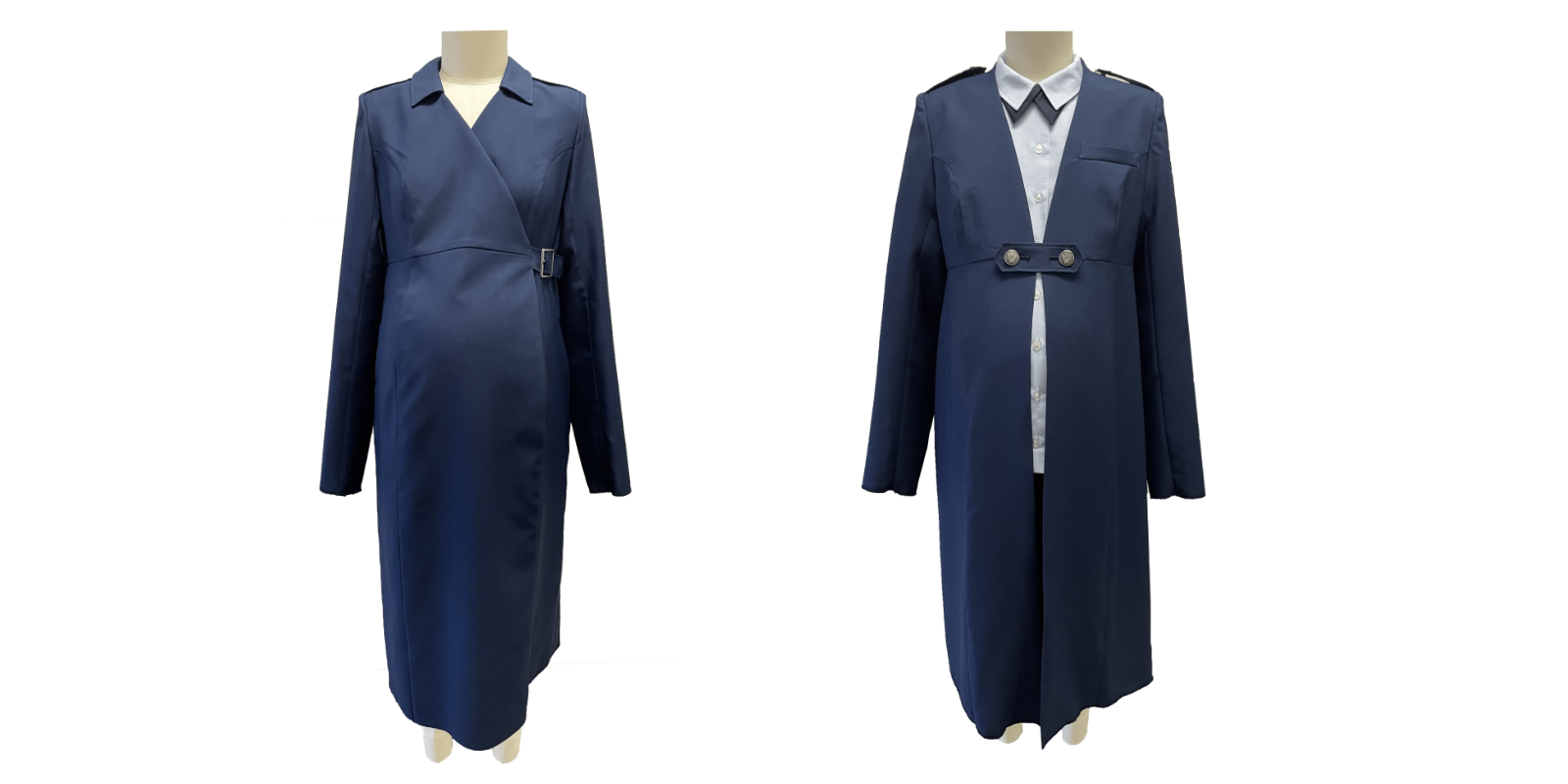
The new maternity wrap dress features long sleeves, a waist side buckle, and a 360-degree stretch panel made with moisture-wicking material that adjusts throughout all stages of pregnancy.
What the Guidance Authorizes
The new uniform change confirms and codifies the formal role of the wrap dress in the Air Force uniform system. Specifically, pregnant Airmen may now wear the maternity wrap dress as the equivalent of:
• Mess Dress (no name tag authorized)
• Semi-Formal Dress (no name tag authorized)
• Class A uniform (metal engraved name tag required)
The mandatory wear date, meaning the date by which the uniform must be fully integrated into the uniform system, is not until July 2030. However, early adoption is encouraged; the dress is already available at some stateside AAFES store locations, with full stateside availability expected by the end of June 2026, and overseas locations will be stocked within the next couple of months.
Space Force: A Notable Exclusion
Space Force Guardians are explicitly not authorized to wear the Air Force maternity wrap dress. They will continue wearing the Air Force jumper under SPFI 36-2903 while the Space Force develops its own maternity uniform, currently in prototype phase, with an expected availability date of 2027.
This distinction reflects the Space Force's ongoing effort to forge its own identity and uniform traditions separate from the Air Force.
Chaplain Uniform Changes at a Glance
Department of the Air Force — Effective June 15, 2026
Source: DAF Implementation Memo, June 15, 2026 · MyBaseGuide.com
Two Changes, One Message
On the surface, a chaplain's insignia and a maternity wrap dress seem to have little in common. But viewed through the lens of institutional culture, these two uniform changes share a common thread: the Air Force is grappling with what it means to see and serve the whole person in uniform.
The chaplain reform acknowledges that the visual markers of military hierarchy can sometimes create barriers: barriers to spiritual care, to honest conversation, to the kind of trust that allows a service member to walk into a chaplain's office and say what they can't say anywhere else. By asking chaplains to lead with their faith identity rather than their rank, the Air Force is betting that accessibility is worth the occasional awkward salute situation.
Air Force Maternity Uniform Changes at a Glance
Department of the Air Force — Effective June 15, 2026
Source: DAF Implementation Memo, June 15, 2026 · MyBaseGuide.com
The maternity wrap dress reform is a different kind of acknowledgment: that for too long, the Air Force's uniform system reflected an implicit assumption that the "standard" service member is neither pregnant nor female. Women were automatically separated from the military when they became pregnant until policy changes in the 1970s. It took another five decades to replace a 1993 jumper with a modern dress designed specifically for the body it's meant to fit.
Both changes, in their own way, are the Air Force saying: we see you, and we're going to adjust the uniform to reflect that.
What to Watch As These Changes Roll Out
As these changes roll out across Air Force installations, a few questions are worth monitoring:
Will the chaplain reform translate into measurably greater help-seeking among junior enlisted?
Tracking whether mental health support and chaplain consultations increase in the months ahead would provide real data on whether the visual change produces behavioral change.
How will the Space Force maternity uniform compare?
With the Space Force's prototype still in development and an expected 2027 release, the branch has an opportunity to design a modern maternity uniform from scratch.
Will other uniform categories catch up?
The maternity wrap dress is a significant step, but the work of designing for female physiology is ongoing. The cultural momentum behind these changes suggests more reforms are coming.
The June 2026 DAF uniform memo may not have made front-page news, but it represents something meaningful: a military institution actively revising its visual language to better serve the people who wear its uniform.
Whether you see these changes as long-overdue corrections or as evidence of a force in healthy evolution, they are a reminder that in the military, what you wear is never just about appearance. It is about belonging, mission, and identity.
Continue Reading
Air Force Releases New Maternity Uniform Items
2026 Brings New Air Force Dress Uniforms and a Sharper Image
Space Force Unveils New Dress Uniforms: What Guardians Need to Know
Join the Conversation

Tracy Fuga
Military Spouse & Military Lifestyle Writer at MyBaseGuide
Tracy Fuga is a San Diego-based writer, editor, and marketing professional with nearly two decades of experience in content creation and communications. A former editor at MARCOA Media — the origina...
Tracy Fuga is a San Diego-based writer, editor, and marketing professional with nearly two decades of experience in content creation and communications. A former editor at MARCOA Media — the origina...
Expertise
- military spouse lifestyle
- small buisness
- entrepreneurship
SHARE: