The Army's New XM8: The Long Road to Replacing the M4
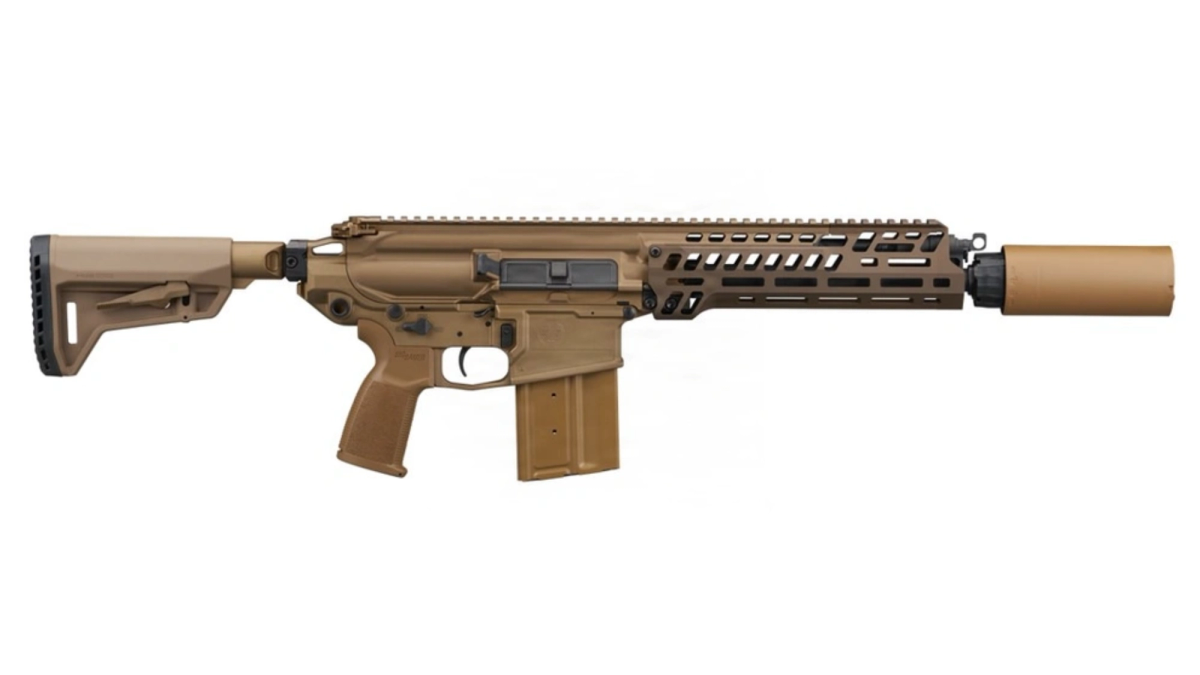
The M4 carbine has been the standard-issue weapon for American infantry for more than three decades, a reliable workhorse that saw action from the mountains of Afghanistan to the streets of Fallujah. Now, the Army is finally moving to replace it - and the weapon chosen for that job is the XM8, a compact carbine built on the platform of the newer M7 rifle and chambered in a cartridge that breaks with NATO's 40-year ammunition standard.
On April 3rd, the Army received its first shipment of XM8 carbines, a shorter and lighter version of the M7 rifle, designed to replace the decades-old M4A1 for soldiers in the close combat force. It is a genuine milestone, and understanding what it means requires a look back at how the M4 got here - and at the long, frustrating history of trying to replace it.

The M4's Long Run
The M4 itself was the product of painful lessons learned. The full-length M16, which debuted in Vietnam, proved too long and unwieldy for vehicle crews, airborne Soldiers, and anyone operating in confined spaces.
The Army responded by shortening it, producing the XM177 "Commando" and later the M4, which standardized the carbine concept across the close combat force. The Army largely replaced the M16A4 with the M4 as its standard combat weapon in the first decade of the post-9/11 wars, with the Marine Corps following suit in the mid-2010s.
The M4 served well. But the wars in Iraq and Afghanistan exposed real limitations - particularly the 5.56mm round's marginal performance against body armor at extended ranges.
Adversaries increasingly wore plates, and the round that had been optimized for lightweight carry and low recoil began to show its age against a more protected enemy. The Army began looking for something better.
A History of False Starts
The M4's replacement story is littered with expensive programs that never made it to the field. The XM29 OICW - an overly ambitious "objective individual combat weapon" that combined a kinetic rifle with a 20mm grenade launcher - collapsed under its own weight and complexity in the early 2000s.
The XM8 program that followed (note: a different, earlier weapon that shared the name) was cancelled in 2005 after questions about testing fairness and the Army's evolving requirements.
The Individual Carbine competition of 2012 was similarly abandoned when the Army concluded no competitor offered sufficient improvement over the M4 to justify the cost. Each failure reinforced the M4's staying power, not because it was ideal, but because replacing it proved remarkably hard.
The difference this time is the ammunition. The Army didn't start with a new rifle - it started with a threat and worked backward. The Army determined that the old standard was inadequate for the modern battlefield, and disrupted the foundation of NATO interoperability by introducing two new squad weapons based on a new ammunition cartridge.
That cartridge is the 6.8x51mm, known commercially as the .277 Fury - a hybrid-case round engineered to deliver significantly higher velocity and penetration than the 5.56mm while remaining manageable in terms of recoil and carry weight.

The XM8: What It Is
The XM8 is the compact member of a new family of weapons built under the Army's Next Generation Squad Weapon program. The XM8 is just over 32 inches long overall, compared to 37 inches for the M7, with a barrel length dropped from 13 to 11 inches.
Without the suppressor, the XM8 weighs 7.33 pounds while the M7 weighs 8.36 pounds. It uses a piston-driven operating system, comes standard with a suppressor, and is compatible with the Army's M157 fire control system - a smart optic that integrates laser ranging, ballistic computation, and aiming lasers. Testing found that the 6.8mm ammunition delivered increased lethality over the M855A1 - the standard round for the M4A1 - against tested targets.
The Marine Corps plans to retain its 5.56mm rifles, with officials indicating it will continue fielding the M27. The Army's focus is on close combat forces - infantry, scouts, combat engineers, forward observers, and combat medics - the soldiers most likely to close with and engage a peer adversary who may be wearing modern body armor.
The Logistics Problem: Two Calibers, One Army
Fielding a new cartridge is never just about ballistics. For the M7, a standard combat load consists of 140 rounds carried in seven 20-round magazines, with a total weight of 4.4 kg - compared to 210 rounds for the M4 configuration. While per-round effectiveness increases, the total carried load for weapon and ammunition is higher, with an increase of about 1.8 kg compared to the previous standard. Soldiers carry less ammunition by count, but more by weight. That trade-off must be managed deliberately.
More significantly, the Army will now operate with two incompatible ammunition standards - 5.56mm for support and rear-echelon units still carrying M4s and M16s, and 6.8mm for close combat forces.
This dual-caliber reality creates genuine friction in logistics, training, and sustainment. Supply chains, storage facilities, and ammunition points all need to account for both rounds. In a high-tempo operation where units are pooling resources, the difference matters.
The NATO Question
The interoperability implications extend well beyond the Army's own supply chain. The 5.56mm SS109 has been the cornerstone of NATO interoperability since 1980, when it was adopted by most NATO countries, allowing allied nations to share not only weapons but also ammunition, facilitating logistics during joint operations. The 6.8mm breaks with that standard, at least for some front line units.
Some countries may opt for a conservative approach, preferring to keep their 5.56mm systems, while others might be tempted by the promise of enhanced capabilities offered by the 6.8mm. If some countries choose to follow the U.S. example and adopt the 6.8mm, others might opt to keep their current 5.56mm systems, creating heterogeneity within the alliance.
The United Kingdom offers an instructive case. Project Grayburn is the British Ministry of Defence's effort to procure between 150,000 and 180,000 new rifles, with a contract award expected by late 2026 or early 2027. Officials have said they want a more lethal option than the SA80 and its 5.56 NATO, suggesting a caliber change is on the table - but Britain is running a longer competition and putting emphasis on NATO interoperability and industrial strategy. The British approach reflects a deliberate caution: the Americans moved fast; the allies are watching carefully before committing.
None of this makes the XM8 the wrong call. Modern adversaries wear body armor that 5.56mm cannot reliably defeat at combat ranges. The threat drove the requirement, and the requirement drove the round. But the Army's leaders, and the policymakers overseeing the NGSW program, should be clear-eyed about the costs - both the logistical friction of running two calibers in the same force, and the alliance-management challenge of diverging from a standard that 40 years of coalition warfare was built upon. Those aren't reasons to stop. They are reasons to plan.
Continue Reading

30+ Things to Do Near Naval Air Station Oceana in Virginia Beach and Chesapeake
Stationed at NAS Oceana? What to Expect at Your New Duty Station

Say Goodbye to the Heavy Ruck: Biotechnology is Replacing the Traditional MRE
Join the Conversation

Mickey Addison
Military Affairs Analyst at MyBaseGuide
Mickey Addison is a retired U.S. Air Force colonel and former defense consultant with over 30 years of experience leading operational, engineering, and joint organizations. After military service, h...
Mickey Addison is a retired U.S. Air Force colonel and former defense consultant with over 30 years of experience leading operational, engineering, and joint organizations. After military service, h...
Credentials
- PMP
- MSCE
Expertise
- defense policy
- infrastructure management
- political-military affairs
SHARE: