The Iran War Enters Week 2: Here's What We Know So Far

As we enter the second week of the war with Iran, we can take stock of what has occurred, what the cost has been so far, and what might lie ahead.
The War So Far
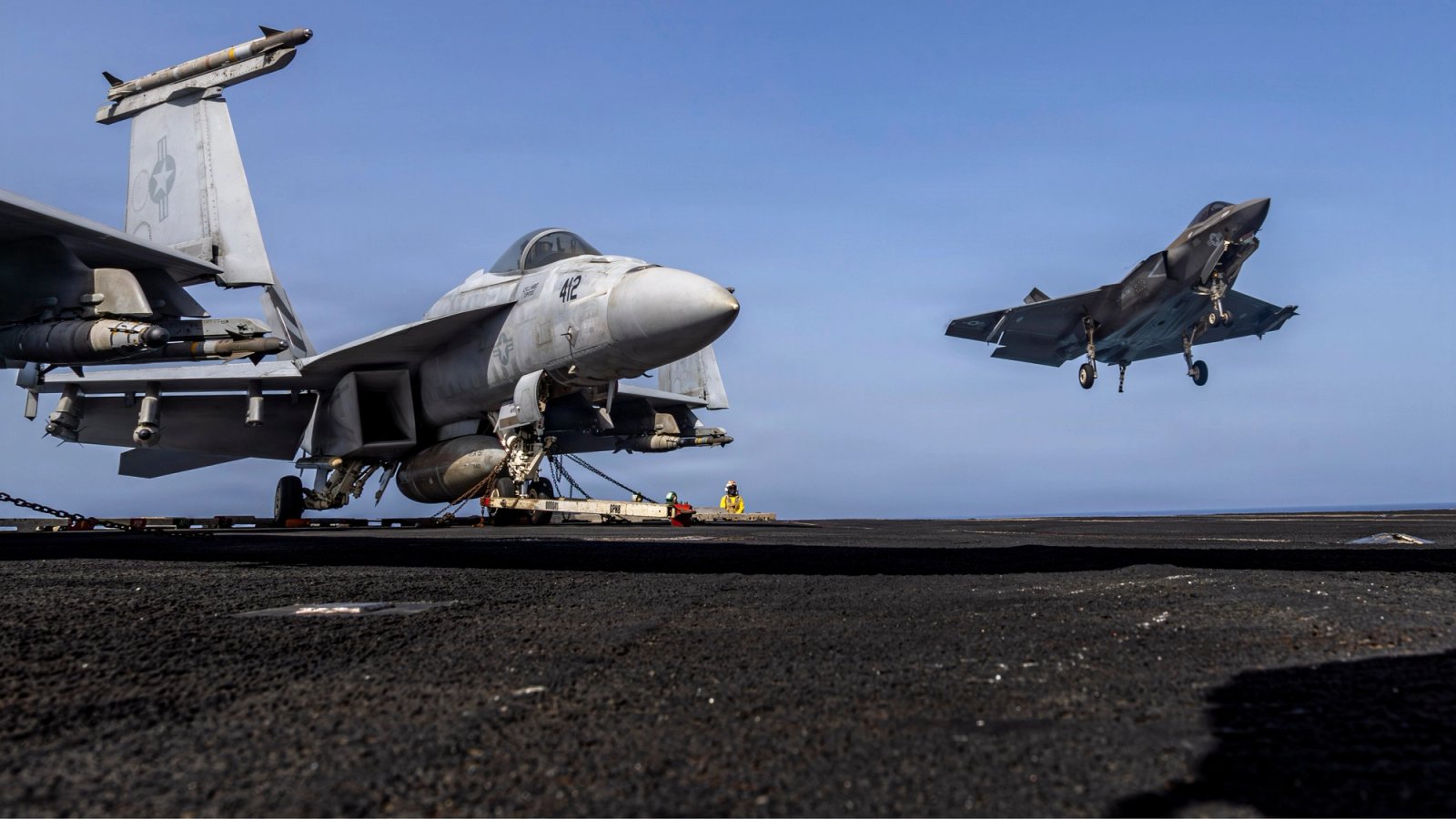
On February 28, 2026, the United States and Israel launched a joint attack on Iran. The initial strikes killed Supreme Leader Ayatollah Khamenei —a fact confirmed by Iranian state media on March 1—and a number of senior regime officials. In a classic air campaign opening, U.S. and Israeli forces targeted air defense sites and missile launch facilities, as well as naval facilities and vessels, in an effort to suppress and destroy Iran's ability to retaliate and defend its airspace. Targets also included Iranian Revolutionary Guard Corps and Quds Force personnel and facilities.
Iranian forces retaliated with Shahed drones and ballistic missiles against U.S. targets across the Persian Gulf, including bases in Kuwait, Saudi Arabia, Iraq, Jordan, Syria, the UAE, and Qatar. Iranian counterattacks have reached as far as Israel, Turkey, Azerbaijan, and Cyprus. As of this writing, Iranian vessels have begun laying mines in the Strait of Hormuz, in a replay of the 1987 Tanker War.
Over the weekend and into this week, the United States intensified its attacks on Iranian naval targets, communications, transportation, and command and control infrastructure. Israel has broadened its strikes to include Iranian oil and gas facilities, as well as targets in Beirut that it identifies as Hezbollah infrastructure.

As of March 11, U.S. Central Command (CENTCOM) confirms American forces have struck more than 5,000 targets inside Iran since Operation Epic Fury began on February 28, while the Israel Defense Forces report conducting approximately 2,500 strikes of their own, including over 1,000 sorties dropping more than 2,500 bombs in the opening 24 hours alone. Combined, the two forces have destroyed an estimated 80% of Iran's air defense systems, more than 300 missile launchers, and at least 46 naval vessels. Defense Secretary Hegseth described March 10 as the most intense day of strikes yet.
Gulf states have been drawn into the fighting to defend their territory. Around March 3, CNN reported the Qatar Air Force reported downing two Iranian Su-24 fighter-bombers assessed to be “two minutes” from striking targets in Qatar. The U.S. maintains a large military presence at Al Udied Air Base, and Doha International Airport is a major transit point for travellers headed between Asia, Europe, and the Middle East. Qatar and the other Gulf states have remained in a firmly defensive posture.
"Qatar has not been part of the campaign targeting Iran," said Qatari Foreign Ministry spokesman Majed Al Ansari. "We are exercising our right to self-defense and deterring Iranian attacks against our country."
Outside the region, NATO, Russia, and Ukraine have each adjusted their posture and, in some cases, provided intelligence and expertise. NATO has moved air and naval assets to Cyprus and Turkey, including forces from Spain and the UK, to bolster air defenses for member states that could be targeted. Ukraine has offered expertise in countering Iranian-made Shahed drones, which Iran previously supplied to Russia and which have been used extensively against Ukrainian forces. Multiple reports from The Washington Post, The New York Times, and CNN cite "officials familiar with the intelligence" claim Russia is sharing targeting data. There has been no confirmation from official sources.
The Cost of War
There have been casualties on all sides, as well as in third countries across the Gulf, the Arabian Peninsula, and Lebanon. Israeli officials and open sources report 2 soldiers and 16 civilians killed, and 2,339 civilians and 14 military personnel injured. The United States has acknowledged 9 servicemembers killed and as many as 150 wounded, primarily from Shahed drone attacks.
The U.S. has also acknowledged losing several sophisticated air defense radar systems to Iranian drones, and three F-15E Strike Eagle fighter-bombers in a friendly fire incident. All crews ejected safely and were recovered. The U.S. has additionally acknowledged the loss of 12 MQ-9 Reaper remotely piloted aircraft.
Iranian sources have acknowledged between 1,255 and 1,761 people killed to date. The humanitarian organization Hengaw estimates the number at a minimum of 4,300 killed, including approximately 3,910 military and regime personnel and 390 civilians. Iran has acknowledged the loss of 18 aircraft and approximately 50 naval vessels of all types, including the frigate IRIS Dena, sunk by a U.S. Los Angeles-class submarine off the coast of Sri Lanka.
Gulf states and other non-combatant countries have reported a combined total of at least 601 people killed and 1,756 injured from Iranian retaliatory strikes, with Lebanon bearing the heaviest toll at 570 killed and 1,444 injured following Israeli strikes on Hezbollah targets.
There are no official figures for the monetary cost of the war, but estimates from the Center for Strategic and International Studies estimate the cost so far could be as high as $7 billion through D+4.

What Might Be Ahead
The administration has offered varying statements on war aims and timeline projections since the conflict began. Officials have at different points described the objectives as destroying Iran's nuclear and missile capabilities, dismantling its navy, removing the regime's leadership, and encouraging Iranians to seek political change.
The stated rationale for the timing of the strikes has also shifted — Secretary of State Rubio initially told reporters that the U.S. joined the attack in part to preempt an anticipated Iranian response to an imminent Israeli operation, a characterization he walked back the following day.
The Defense Department and the president have projected an open-ended timeline, emphasizing operational metrics such as targets struck and sorties flown rather than specific end conditions. On March 10, President Trump suggested the conflict may be nearing a conclusion, telling a press conference the war was "complete" — though fighting was ongoing at the time of that statement.
What the ultimate objectives are, and when U.S. and Israeli leadership consider them met, remains to be seen.
Continue Reading
The Iran War 100+ Days In, Where We Are and What’s Next
Join the Conversation

Mickey Addison
Military Affairs Analyst at MyBaseGuide
Mickey Addison is a retired U.S. Air Force colonel and former defense consultant with over 30 years of experience leading operational, engineering, and joint organizations. After military service, h...
Mickey Addison is a retired U.S. Air Force colonel and former defense consultant with over 30 years of experience leading operational, engineering, and joint organizations. After military service, h...
Credentials
- PMP
- MSCE
Expertise
- defense policy
- infrastructure management
- political-military affairs
SHARE: