Sailors, Marines With Shaving Waivers Now Face Formal Counseling at Six Months

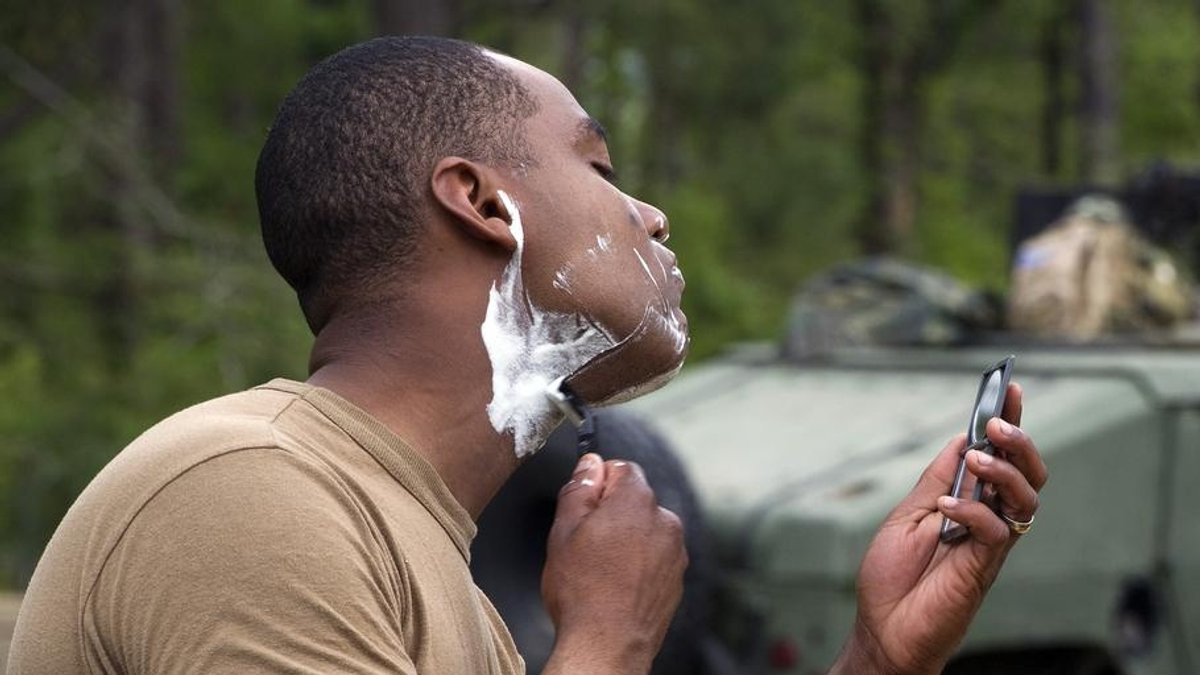
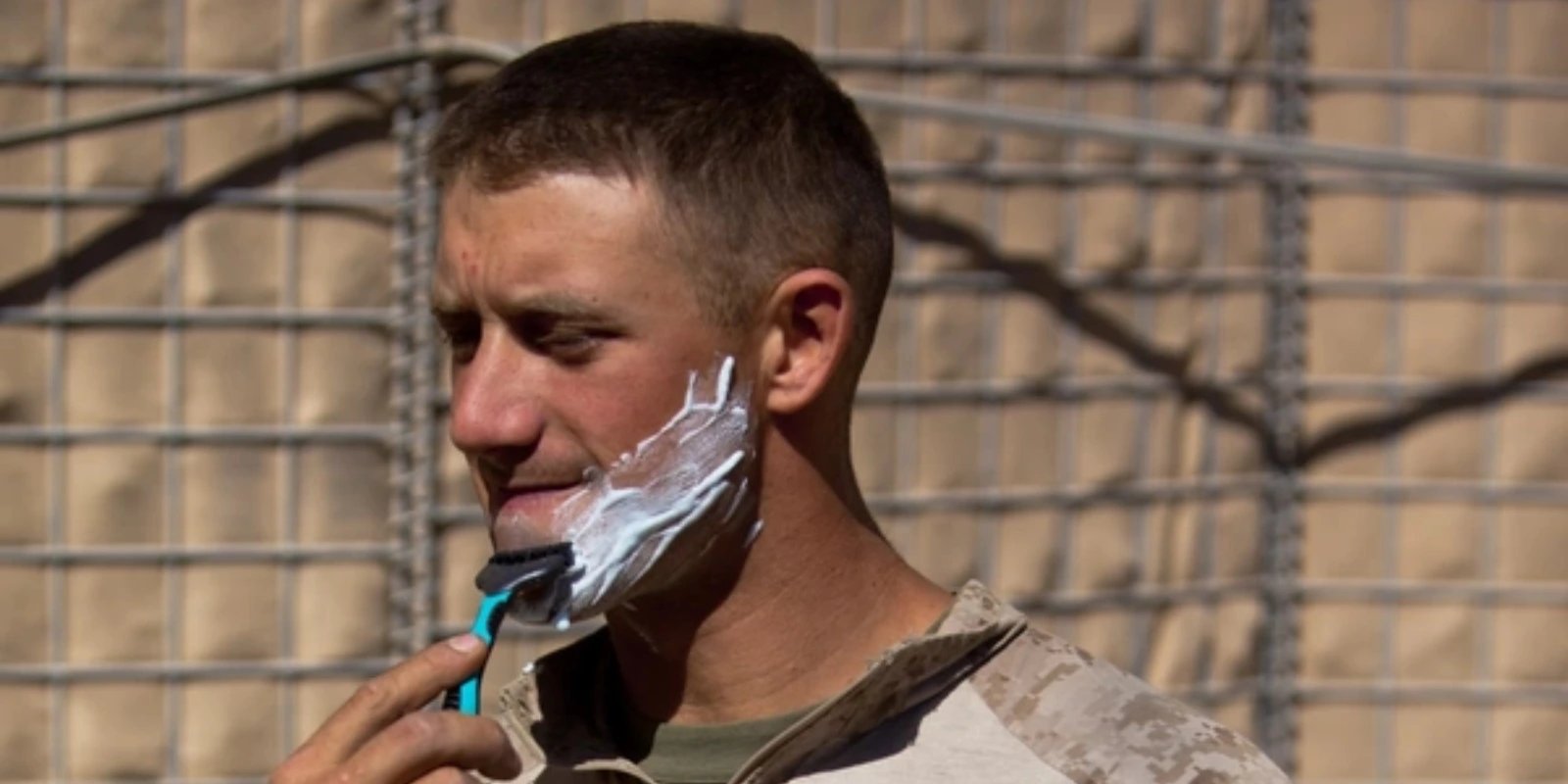
The Navy and Marine Corps have both formalized a six-month checkpoint for service members holding medical shaving waivers, adding a documented counseling requirement partway through the one-year clock the Pentagon set last year for Troops who cannot meet the clean-shaven standard.
Under NAVADMIN 162/26, released July 7, 2026, Sailors with an approved facial hair accommodation for a medical condition are reviewed after six continuous months of treatment.
The message states,
“The operational success of the U.S. Navy demands the readiness of all Sailors. Mission accomplishment hinges on stringent compliance with standards and ensuring implementing policies are clear, unambiguous, and compliant with law and regulation,” adding that “grooming standards add to Sailor and mission safety and ensure the safe and proper utilization of protective equipment in all naval environments and operational conditions.”
The Navy’s position is that the counseling is meant to make sure the Sailor understands where they stand in the accommodation process, what is expected going forward, and what could happen if the underlying condition does not resolve.
As a Navy official explained, “The purpose of the counseling is to ensure the Sailor understands the status of the medical accommodation process, the expectations associated with continued accommodation, and any potential impacts if the medical condition persists.”
The Navy has been explicit that the session itself is not punitive.
“The counseling itself is not punitive and is intended to document the discussion and ensure the sailor is informed as the accommodation progresses through the milestones established in the policy,” the official added.
Sailors who remain unable to shave after twelve months of treatment will be evaluated for continued naval service, with administrative separations under the policy beginning September 30, 2026.
The Marine Corps built the same six-month milestone into MARADMIN 192/26. Commanders must conduct formal, documented initial counseling for any Marine who has needed a grooming modification for six continuous months. The Marine receives formal documentation, otherwise known as a “Page 11 entry,” acknowledging the counseling took place. That documentation becomes a part of the Marine’s Electronic Service Record (ESR). At twelve months without resolution, review is mandatory rather than discretionary, and a commander must obtain a medical endorsement to begin administrative separation under the Condition Not a Disability provision. No separations under the Marine Corps policy will be approved before October 2026.
Both directives use the word “counseling.” That word carries more weight in the military than it might appear on the surface. While it may not necessarily be adversarial, a formal military counseling session by the command is anything but benign. The counseling required by NAVADMIN 162/26 and MARADMIN 192/2 is a formal, documented meeting with the commanding officer that serves as a halfway progress check to ensure the service member is actively participating in their prescribed dermatological treatments and maintaining their facial hair at the authorized one-quarter-inch limit. Crucially, the session acts as an official career warning, notifying the Sailor or Marine that they have only six months left of their absolute 12-month compliance window to successfully manage their skin condition before facing possible mandatory evaluation for administrative discharge.
Both services' waivers are capped at ninety-day increments, renewable up to the one-year limit, and both trace directly to Defense Secretary Pete Hegseth's August and September 2025 directives ordering the services to limit shaving waivers and treatment to twelve months.

Shaving Standards Have Changed Over the Years
The Department of the Navy did not arrive at a clean-shaven standard by a straight line. Secretary of the Navy George Badger issued the service's first grooming regulations in 1841, requiring hair and beards to be kept short, the source of what Sailors of the era called "badger whiskers." The rules loosened and tightened repeatedly over the following century.
Secretary William A. Graham's 1852 uniform regulations barred officers and men from wearing mustaches and "imperials," a partial beard styled upward over the cheeks, while still permitting closely kept whiskers. Secretary James Dobbin, who took office the following year, later relaxed the standard to allow "neatly trimmed" beards at a Sailor's discretion, an allowance broadly interpreted through the Civil War era. Exceptions for submariners, who had limited fresh water for shaving, and for sailors in cold climates persisted for decades.
The most consequential swing came under Chief of Naval Operations Elmo Zumwalt, whose November 1970 “Z-Gram 57” explicitly authorized beards, mustaches, and longer hair as part of a broader effort to modernize the service and address retention during Vietnam. By 1984, CNO Adm. James D. Watkins moved to end the practice, and the return to clean-shaven Sailors took effect January 1, 1985, with exceptions only for medical waivers approved by a commander on a medical officer's recommendation. The Navy and Coast Guard were the last two services to permit facial hair. Watkins cited both professionalism and the ability of Sailors to achieve a proper seal on emergency breathing apparatus, the same safety rationale the service invokes today.
The Marine Corps never went through a comparable liberalization. The Corps has maintained a clean-shaven standard as a matter of institutional identity for most of its modern history, treating uniformity of appearance as inseparable from discipline. Its shaving waiver system has functioned narrowly, as a medical accommodation rather than a grooming option, which is part of why the Corps' tightened waiver policy landed with particular force within its ranks.
The Exception the Pentagon Still Allows: The Tactical Beard
One beard has survived nearly every rollback: the one worn by special operations forces in the field. Naval Special Warfare operators, along with their counterparts across the joint special operations community, grew beards during the wars in Afghanistan and Iraq under command authority exercised at the unit or detachment level rather than through a standing regulation. The rationale was practical rather than aesthetic.
In Afghanistan in particular, a beard signaled maturity and standing to the local elders that Army Special Forces worked alongside, and operators found it easier to build the trust that advising and training missions required when they did not look categorically different from the men they were training. Other special operations units without that advisory mission adopted beards for the same permissive reason without the same operational logic behind it.
That distinction has outlasted the broader shaving debate. Hegseth has said explicitly that beards will remain available to some special operations formations that request modified standards for what the Pentagon calls mission-essential requirements, framing the line bluntly: Troops who want a beard can pursue special operations service, and those who do not qualify are expected to shave.

Why the Waivers Exist in the First Place
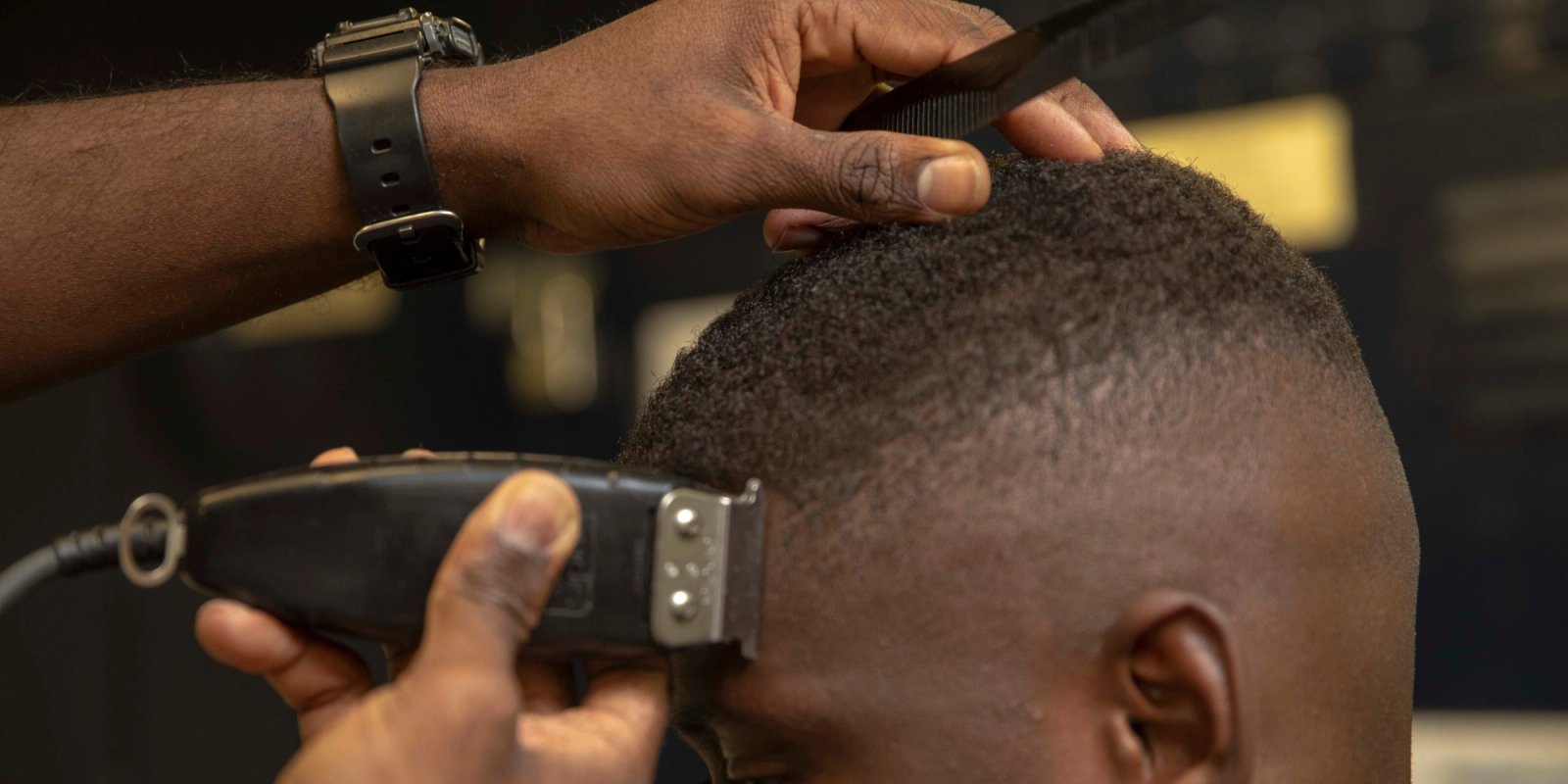
The medical waivers now on a strict clock exist almost entirely because of pseudofolliculitis barbae, commonly known as razor bumps or “PFB.” The condition develops when curved or curly facial hair, cut close by shaving, curls back into the skin as it regrows, producing inflammation, irritation, and, in persistent cases, permanent scarring.
The American Osteopathic College of Dermatology puts the prevalence at up to 60 percent of Black men, a far higher rate than in any other group, a product of hair follicle shape and growth pattern rather than shaving technique. Military and civilian dermatologists have said for decades that the standard treatment is not a better shave but simply allowing the hair to grow long enough to escape the skin, and that shaving daily tends to make the condition worse, not better.
That is the medical reality the services are now weighing against a readiness argument centered on respirator and breathing-apparatus seals. The evidence on that point is contested. A 2018 study in the Journal of Occupational and Environmental Hygiene found a 98 percent respirator fit-test pass rate among men with an eighth of an inch of beard growth, and an 81 percent pass rate at a quarter inch, the exact length the Navy's current policy permits under an approved waiver. The Navy conducted its own study on masks and facial hair in 2023 but never released the results. Dermatologists with military experience have called the seal rationale unsubstantiated as applied to the length of beard growth the waivers actually allow.
The career stakes are not new. A 2021 Air Force study found that airmen holding shaving waivers faced significantly longer waits for promotion and were frequently barred from assignments such as Honor Guard, recruiting, and military training instructor duty, regardless of the race of the individual waiver holder.
Because a disproportionate share of waiver holders are Black, due entirely to the underlying prevalence of PFB, the practical effect of any policy that treats a waiver as a mark against a service member's record falls unevenly on Black Sailors, Marines, Airmen, and Soldiers. That is the tension sitting underneath the Navy's and Marine Corps' new six-month counseling requirement: a documented, non-punitive check-in on a medical condition that, for a meaningful share of the force, has no cure but time.
Continue Reading
New Shaving Rules Give Marines 12 Months to Meet Standards or Face Separation
Marine Corps Tightens Shaving Waiver Rules for Medical Cases
Air Force Enforces New Facial Hair Standards in 2024
Join the Conversation

Mickey Addison
Military Affairs Analyst at MyBaseGuide
Mickey Addison is a retired U.S. Air Force colonel and former defense consultant with over 30 years of experience leading operational, engineering, and joint organizations. After military service, h...
Mickey Addison is a retired U.S. Air Force colonel and former defense consultant with over 30 years of experience leading operational, engineering, and joint organizations. After military service, h...
Credentials
- PMP
- MSCE
Expertise
- defense policy
- infrastructure management
- political-military affairs
SHARE: