National Guard’s $292 Million Housing Contract Will Move D.C. Troops Out of Hotels
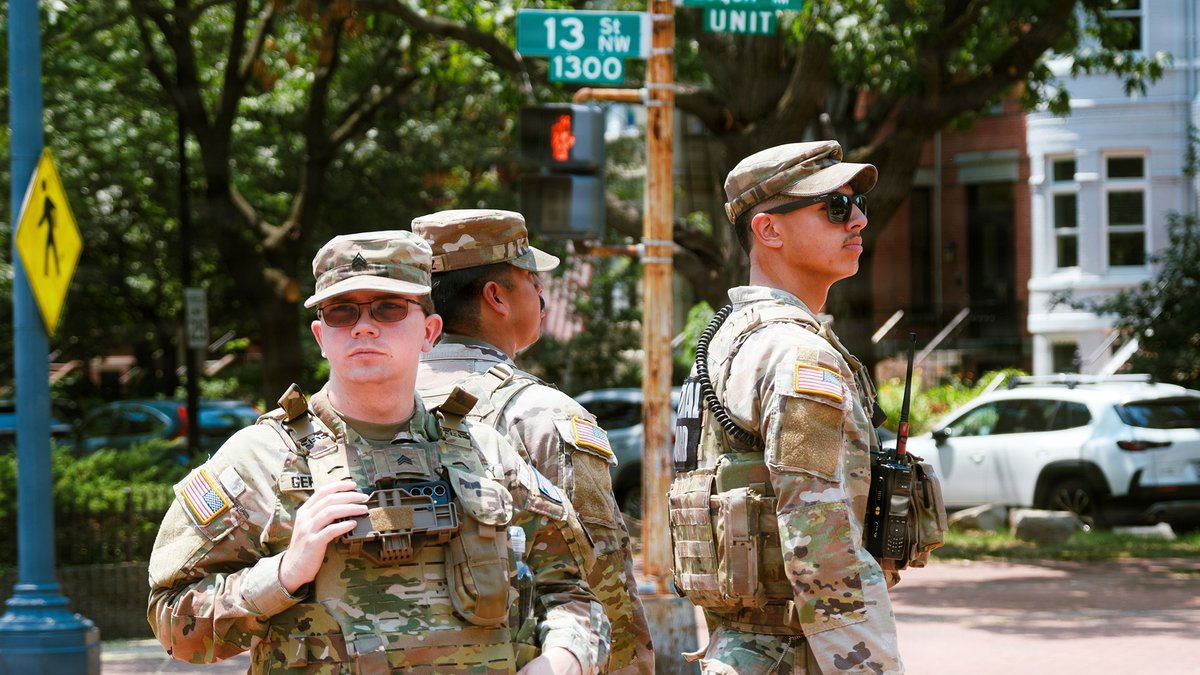
While the ongoing deployment of National Guard troops to Washington, D.C., has been a source of much political debate, improving the well-being of those service members is something everybody can get behind. Which is why it’s a good thing in many ways that thousands of those troops deployed to our nation’s capital city may soon see a major upgrade in their living conditions.
Rather than continuing to stay in various hotels scattered throughout the region, many will soon move into furnished, apartment-style accommodations under a new contract between the National Guard Bureau and lodging company Placemakr.
This past July, the Guard announced that it had awarded Placemakr a $292 million contract to provide up to 2,000 lodging units for Guardsmen assigned to Joint Task Force-District of Columbia. The arrangement is designed to provide relatively long-term housing for troops, which will improve living conditions, security, and operational efficiency.
Why the Guard Troops in DC Needed New Places to Live
The housing change comes after a dramatic expansion of the D.C. National Guard mission.
What began in August 2025 as a deployment involving hundreds of Guardsmen grew into a much larger mobilization of troops from multiple states across the country. By July 2026, thousands of National Guard members from multiple states were assigned to the Joint Task Force-District of Columbia mission. That same month, Task & Purpose reported that approximately 4,755 Guardsmen from 15 states were assigned to the mission at that time.
Many of those service members lived far outside the Washington area and wound up staying at various hotels in and around the city.
Putting up that many troops in places typically meant for relatively short stays became increasingly difficult to sustain as the deployments continued for months and increased in size.
And, according to the National Guard, this new contract with Placemakr provides a more stable living arrangement for its personnel while reducing the costs of renting all those rooms in conventional hotels. Officials described the acquisition as the largest interagency lodging acquisition in National Guard history.

What Guardsmen Are Getting
According to their company website, Placemakr specializes in furnished, temporary accommodations that combine features of traditional apartments with services more commonly associated with hotels. The company's properties offer housing units with amenities such as kitchens or kitchenettes, Wi-Fi, smart televisions, and laundry facilities. Plus, depending on the property, residents can also have access to fitness centers, parking, and housekeeping services. Units available through this contract range from small studios to multi-bedroom apartments and can include full kitchens or partial kitchenettes, in-unit or on-site laundry, weekly housekeeping, and other hotel-like amenities.
For service members who may be deployed for an extended period, having access to a kitchen, laundry facilities, and an upgraded private living space can make an extended assignment like the D.C. deployments feel considerably more comfortable than spending weeks or months in a conventional hotel room.
In their reasons for signing this contract, the National Guard specifically cited more stable living conditions, improved privacy and quality of life, secure parking, and consolidated support services as benefits of the new arrangement.
Consolidating Troops Scattered Across Multiple Hotels
The change will also hopefully make the logistics of the Guard’s D.C. deployment easier. Before, the DoD housed Guardsmen in an array of hotels spread throughout the Washington metropolitan area. That meant maintaining a complicated logistical and administrative network across a large number of separate lodging arrangements and moving personnel between their accommodations and their duty locations.
The arrangement with Placemakr is intended to consolidate more of that support while providing troops with a more consistent place to live. The National Guard said the move could also free up a significant number of commercial hotel rooms in the region, which matters because Washington is a hub of tourism and business travel.
A Cost-Saving Measure for the National Guard
The Guard's argument for this new arrangement isn't based solely on comfort. According to the National Guard Bureau, the government negotiated pricing approximately 49% below projected short-term commercial hotel costs and 27% below standard General Services Administration schedule pricing for lodging and housekeeping services. That is particularly significant given the size and uncertain duration of the D.C. mobilization.
The federal government's contract database identifies the agreement as a lodging contract involving residential buildings and dwellings. The current period runs from June 2026 through June 2027, with additional time potentially extending the arrangement into 2028.
In other words, the $292 million figure represents the potential ceiling of the arrangement rather than money that has already been paid to Placemakr.

What It Means for Guardsmen Deployed to D.C.
For the men and women actually living in these units for extended periods, the most important part of the contract is probably the amount of money it saves the federal government. It's having somewhere that feels closer to a home than a hotel. National Guard members often spend long periods away from their regular units, civilian jobs, families, and homes when they’re mobilized. Unlike active-duty troops stationed permanently at a military installation, Guardsmen on a domestic mission may find themselves working in a major metropolitan area without a traditional military housing infrastructure and its related services readily available to them.
A furnished apartment provides some of the ordinary conveniences that can become surprisingly important during a long deployment: a place to prepare food, greater privacy, personal laundry access, and a little more separation between the rigors of work and one’s personal life.
The National Guard has also emphasized operational security and readiness as reasons for changing the housing arrangement. Consolidating troops into purpose-selected lodging can make it easier to manage transportation, coordinate support services, and enforce accountability while providing service members with more stable living conditions.
The arrangement also reflects just how much the D.C. mission has grown beyond its original size. What initially began as a deployment of roughly 800 local Guardsmen eventually expanded to include thousands of personnel from all over the United States. By the summer of 2026, the mission became large and long enough that temporary hotel accommodations were no longer the most practical housing option.
A Sign That the D.C. Mission Will Continue
Perhaps the biggest takeaway from the housing contract is what it says about the expected duration of the D.C. deployment. A short-term mobilization can be supported through hotels and other temporary arrangements. Signing a multiyear lodging agreement for as many as 2,000 furnished apartments suggests the federal government expects significant numbers of non-local Guardsmen to remain in Washington for a good while longer. Ergo, Guardsmen can reasonably assume that the D.C. mission is no longer something that can necessarily be viewed as a brief potential interruption to their normal lives.
Instead, thousands of America’s citizen-soldiers and Airmen will likely be obligated to maintain military responsibilities in the nation's capital for an extended period in the coming months and years. Providing them with more stable housing is one way the military can make that more manageable and more tolerable.
Continue Reading

A Permanent US Military Base in Poland Could Soon Become Reality

200 Faiths Down to 30: What the New Religious Code Consolidation Means for Your Personnel Records
The Pentagon’s New Cognitive Tests Are Changing How the Military Tracks Brain Health
Join the Conversation

Paul Mooney
Veteran & Military Affairs Correspondent at MyBaseGuide
Paul D. Mooney is an award-winning writer, filmmaker, and former Marine Corps officer (2008–2012). He brings a unique perspective to military reporting, combining firsthand service experience with exp...
Paul D. Mooney is an award-winning writer, filmmaker, and former Marine Corps officer (2008–2012). He brings a unique perspective to military reporting, combining firsthand service experience with exp...
Credentials
- Former Marine Corps Officer (2008-2012)
- Award-winning writer and filmmaker
- USGS Public Relations team member
Expertise
- Military Affairs
- Military History
- Defense Policy
Calculate Your BAH
Planning your housing budget? Use our 2026 BAH Calculator to see your Basic Allowance for Housing rates for your base.
Calculate BAH Rates →SHARE: