The Marine Corps Is Bringing Back Mandatory Flu Shots for Some (But Not All) Personnel


While by no means the biggest issue members of the US Armed Forces often find themselves dealing with, the intense and pseudoscientific skepticism of vaccines that’s gained mainstream attention in recent years is certainly one of them. After a controversial rollback of mandatory vaccinations for troops led to a deadly flu outbreak earlier this year, the Department of Defense’s policy has shifted yet again with different standards and schedules for different branches.
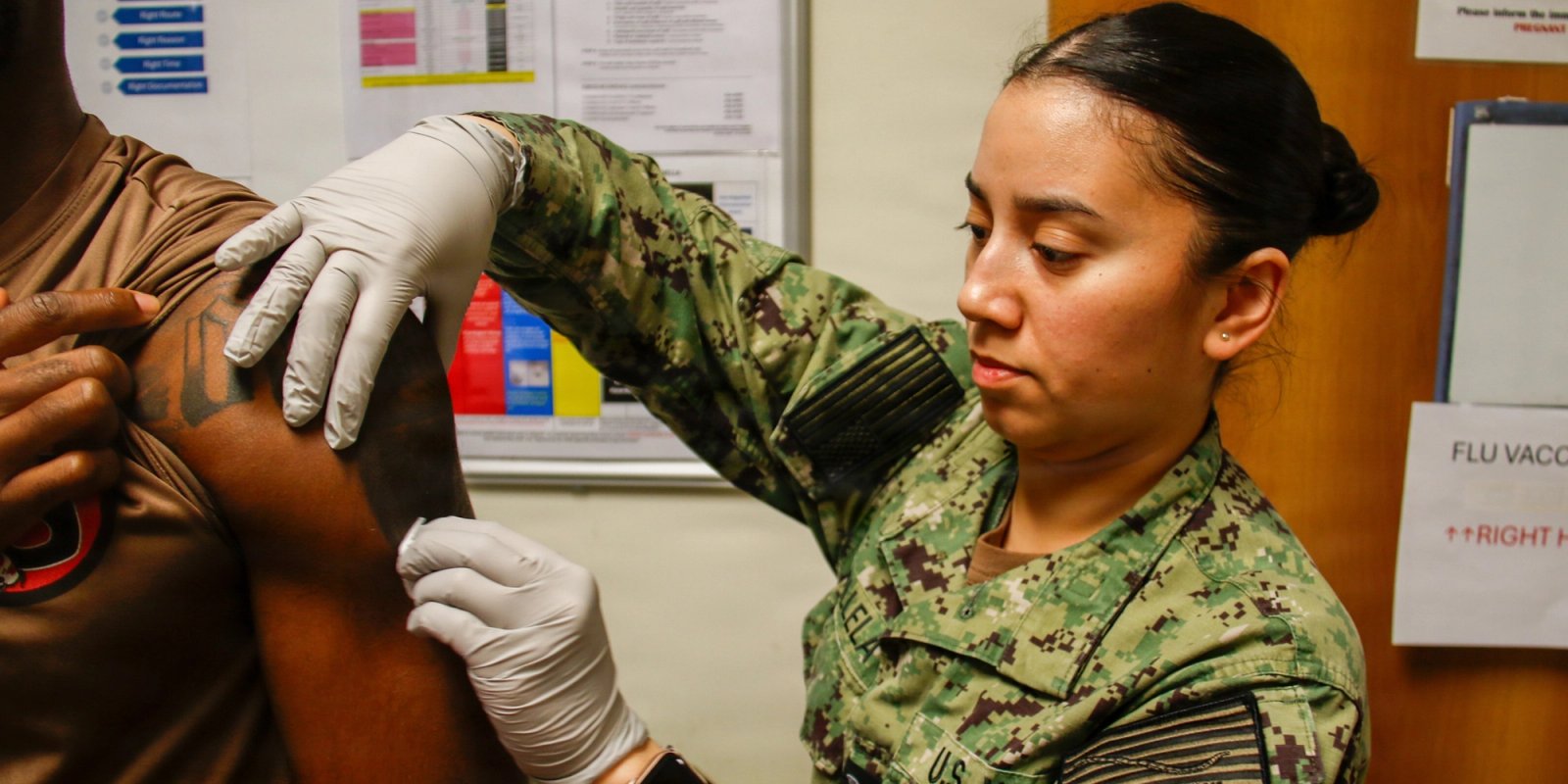
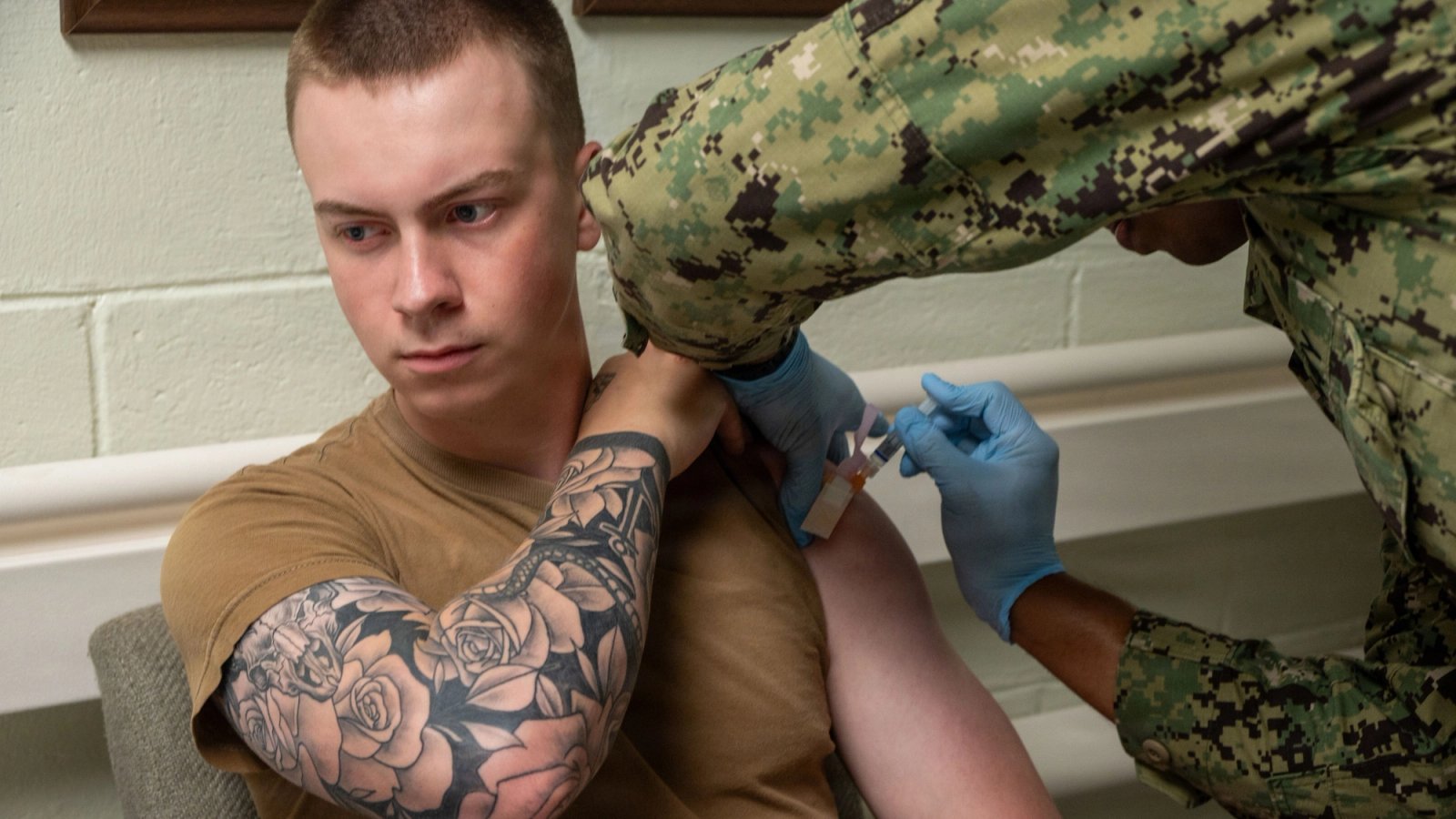
Some Marines, for example, can choose to get an influenza jab or not. But it’s now a requirement for others. With the months when the disease tends to hit Americans hard fast approaching, the Marine Corps has issued its official vaccination guidance for the 2026-27 flu season, which reinstates mandatory vaccination for certain groups.
This new policy means that whether a Marine needs an annual flu vaccine depends largely on their assignment, training status, or operational duties. Most of the branch’s personnel can decide whether to receive the seasonal vaccine, while Marines and other personnel in certain high-risk or mission-critical positions must receive it unless they qualify for an approved exemption.

Which USMC Personnel Need a Flu Shot?
The Marine Corps' new guidance, issued in late August, made influenza vaccination optional except for what it calls "required personnel." That is an important distinction for Marines who may have heard some scuttlebutt that the military has brought back a blanket flu-shot mandate because, for better or worse, it has not.
The largest group of those designated required personnel is those in initial training. That includes enlisted Marines going through boot camp, Officer Candidates School, the U.S. Naval Academy, or any entry training pathways. Anyone assigned to or participating in those programs is required to receive the annual seasonal influenza vaccine.
Healthcare personnel are another major category. Marines and other USMC personnel who have direct patient contact or exposure to patients are also required to receive the vaccine. Reserve-component healthcare personnel can also fall under the requirement, including those who may be exposed to infectious agents even if they are not directly providing patient care.
The policy also covers certain operational assignments, such as Marines deploying to locations where influenza vaccination is required by the theater or host country. Other groups in need of vaccinations include:
- The Marine Corps Security Force Regiment.
- The Chemical Biological Incident Response Force and reserve personnel assigned to the Chemical, Biological, Radiological and Nuclear Enhanced Response Enterprise.
- Reservists activated under Title 10 orders for deployment to combatant-command theaters where the vaccine is required for one reason or another.
- Reservists on “Title 10 orders for formal military and/or nominative training in congregated settings.”
In simple terms, a Marine filling in a typical administrative assignment and/or stationed stateside for the foreseeable future may not be required to get a flu shot. But a Marine preparing to deploy, working in a medical environment, or new to the uniformed service faces a mandatory vaccination requirement.
Why the USMC Flu Vaccine Policy Changed Yet Again
This newest update to USMC vaccination rules is the latest step in the larger, currently shifting US military policy on vaccines. For years, annual flu vaccination was a routine requirement throughout the military. After all, American researchers developed the world’s first flu vaccines in the 1930s and '40s with the help of the Army, which hoped to find a way to prevent the disease after the infamous 1918 pandemic sickened and killed so many troops in the final year of WWI. But times have changed, and the once celebrated accomplishments in disease prevention have become controversial among certain sects of the American population and political sphere. This issue has, as happens so often, bled over into military policy, resulting in the recent waves of changes.
The Marine Corps' 2025-26 guidance, for example, required all active-duty component personnel to receive the seasonal influenza vaccine unless they had a medical or administrative exemption. That changed in April 2026, when the Defense Department announced that annual influenza vaccination would become voluntary for active and reserve component service members as well as DoD civilian personnel.
“The notion that a flu vaccine must be mandatory for every service member, everywhere, in every circumstance, at all times, is just overly broad and not rational,” Defense Secretary Pete Hegseth stated at the time, adding that the DoD was “seizing this moment to discard any absurd overreaching mandates that only weaken our warfighting capabilities.”
The policy change applied across the military and represented a significant departure from the previous approach. But the new policy soon proved short-sighted. In June, a flu outbreak at Lackland Air Force Base in Texas sickened hundreds of military trainees and killed one. The outbreak occurred at a post where recruits and trainees live and train in close proximity for weeks on end, conditions that can allow respiratory illnesses to spread quickly. The death sparked immediate congressional backlash, with lawmakers arguing the tragedy was a direct result of the rollback.
"This is a tragedy that could have been prevented were it not for the reckless actions of Secretary Hegseth," Representative Joaquin Castro (D-Texas) stated following the outbreak, adding, "Our military must be guided by science, not politics."
The tragedy at Lackland prompted the Pentagon to allow the military services to request exceptions to the voluntary vaccination policy for certain personnel. In June, the Pentagon announced the restoration of mandatory flu vaccinations for basic military trainees, a change intended to address the particular circumstances of training environments, where large numbers of recruits spend extended periods living, sleeping, and sweating shoulder-to-shoulder.
The Marine Corps' new policy reflects that post-outbreak decision. While it does not restore a universal requirement, it identifies specific populations whose mass vaccination the service considers necessary to support force health and mission readiness.

The Marine Corps' Reasoning for the Change
The Corps' 2026-2027 guidance lays out its reasoning fairly straightforwardly: influenza can spread quickly and severely disrupt military operations when it does. It aptly describes seasonal influenza as a "highly contagious disease" capable of significantly affecting force health and mission readiness.
It also says that a vaccination program for those it considers required personnel is intended to reduce risks to both the force and the mission. That concern is particularly important in places such as recruit depots, training schools, ships, and medical facilities.
The Marine Corps guidance specifically notes that influenza outbreaks can degrade unit readiness, disrupt training schedules, and hinder deployment execution. It directs medical representatives to monitor influenza-like illness and respond to local or command-wide outbreaks and hospitalizations. For Marines in the categories covered by the mandate, vaccination is therefore being treated as part of the broader force-health-protection system rather than simply a personal medical decision.
When Do Affected Marines Need to Be Vaccinated?
According to the service's guidance, "the Marine Corps active component shall ensure 100 percent of personnel identified by the command... are compliant with DoD policy (vaccinated or approved medical or administrative exemption) no later than 15 December 2026."
Marines reporting to a command where vaccination is required are encouraged to receive the vaccine before arriving, but those who can’t get the shot before reporting must become compliant within 30 days.
The guidance also directs commanders to prioritize operational forces and training commands when vaccine supplies are distributed, with particular attention to deploying forces, recruits and instructors at recruit depots, and healthcare providers assigned to Marine Corps units.
Can Marines Obtain Exemptions?
The new requirement does not eliminate the possibility of an exemption. The Marine Corps guidance states that individual service members may receive medical or administrative vaccine exemptions.
The guidance also references existing military policies governing religious practices and immunization exemptions. Marines with questions about whether they qualify for an exemption should work through their chain of command and appropriate medical or administrative channels to find out if they’re eligible.
A New Flu-Shot Policy for a Changing Military
The latest Marine Corps guidance may confuse some personnel at first, coming after other major changes to military vaccine policy, but what it means for individual Leathernecks is fairly straightforward: those in the above-mentioned categories/units must receive the vaccine for the 2026-27 season or obtain a formal exemption.
Marines should find out whether their current or upcoming assignment puts them in one of the required categories before assuming that the flu vaccine is optional. As the colder, sicker months approach, commanders will bear responsibility for identifying and tracking personnel who fall under the requirement, while affected Marines will need to meet the vaccination deadline or have an approved exemption.
For a force that spends much of its time training, deploying and working in close quarters, the flu may be an annual recurring problem. But the Marine Corps' latest guidance makes clear that, for some personnel, avoiding that problem with a little injection of proven science is once again considered part of the job.
Continue Reading
The Flu Shot Is Now Optional for All Troops. Which Vaccines Are Still Mandatory?
Military Reinstates Flu Shot Mandate for Recruits Amid Growing Outbreak
Pentagon Adjusts Flu Shot Policy for Troops' Readiness
Join the Conversation

Paul Mooney
Veteran & Military Affairs Correspondent at MyBaseGuide
Paul D. Mooney is an award-winning writer, filmmaker, and former Marine Corps officer (2008–2012). He brings a unique perspective to military reporting, combining firsthand service experience with exp...
Paul D. Mooney is an award-winning writer, filmmaker, and former Marine Corps officer (2008–2012). He brings a unique perspective to military reporting, combining firsthand service experience with exp...
Credentials
- Former Marine Corps Officer (2008-2012)
- Award-winning writer and filmmaker
- USGS Public Relations team member
Expertise
- Military Affairs
- Military History
- Defense Policy
SHARE: