Air Force Moves to Rename Joint Base Charleston After Lindsey Graham

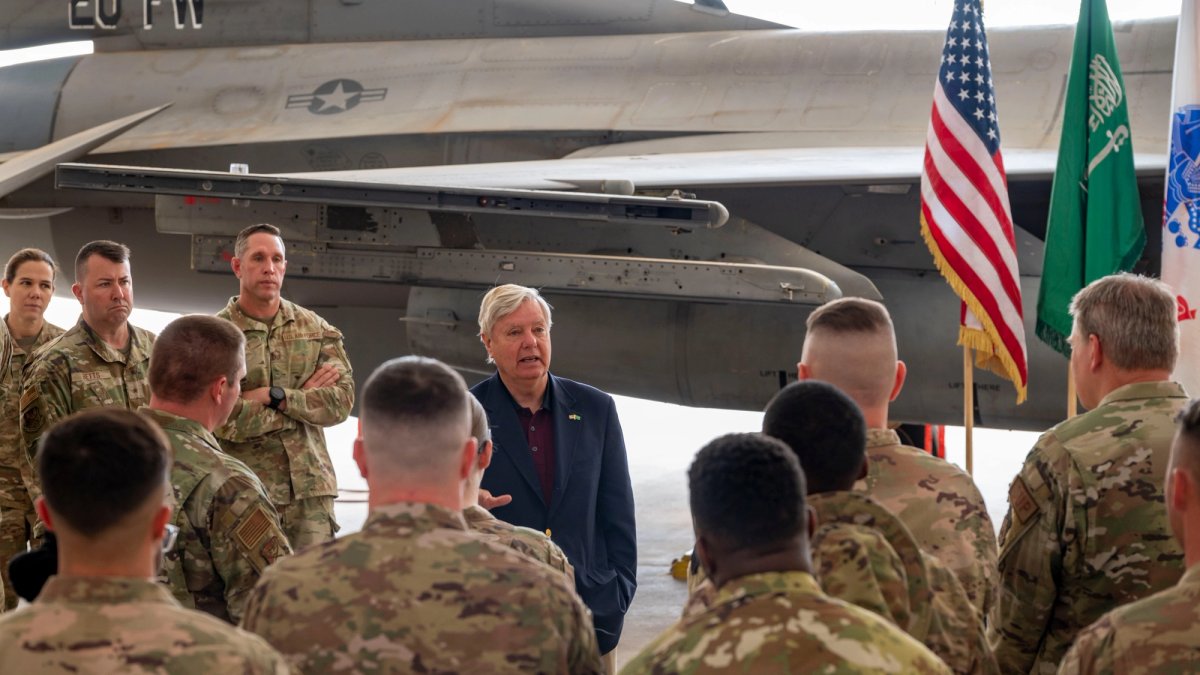
Six days after Sen. Lindsey Graham was carried into the U.S. Capitol Rotunda by an Armed Forces Body Bearer Team, the Air Force moved to put his name on the East Coast's busiest military airlift hub, directing staff to begin converting Joint Base Charleston into Joint Base Lindsey Graham.
The order, issued in a July 27 memo from Secretary of the Air Force Troy Meink, arrived as dignitaries gathered in Washington for Graham's funeral; a Capitol memorial service followed by a National Cathedral eulogy from President Donald Trump. It also arrived fast enough that at least one Charleston-area lawmaker says the region never got a say.
"Senator Graham was a major asset to South Carolina's military community, but renaming Joint Base Charleston this fast feels like another rushed decision with no local input," said state Sen. Ed Sutton, a Charleston Democrat and Air Force Reserve officer.
"Charleston Air Force Base has carried that name since the 1940s. Honor him, yes. Erase local tradition by fiat, no."
The dispute over process (not the tribute itself) has become the sharpest edge of a story that is otherwise a wall-to-wall show of bipartisan mourning for a senator who spent 33 years moving between Capitol Hill and a military uniform.

Who Was Lindsey Graham?
Graham, 71, died July 11 of an aortic dissection (a tear in the body's main artery) hours after returning from his tenth wartime visit to Ukraine and the night before a scheduled appearance on NBC's "Meet the Press." His office described it as a "brief and sudden illness."
Born in the small upstate town of Central, South Carolina, Graham grew up living with his family behind their liquor store, restaurant, and pool hall. Both of his parents died while he was still in school, and Graham became the legal guardian and primary caretaker of his younger sister, Darline.
He built a career that ran in parallel tracks (law and the military) before either turned political. After graduating from the University of South Carolina School of Law, Graham entered the Air Force as an active-duty judge advocate.
He then spent four years as the Air Force's lead prosecutor for its felony case division, based out of Rhein-Main Air Base in Germany, during which he also helped expose flaws in the military's drug-testing protocols. His work was later credited with clearing service members who had been wrongly implicated and featured on "60 Minutes."
In 1989, he transferred to the South Carolina Air National Guard, serving in a similar legal role at McEntire Air National Guard Base near Columbia, including during the first Gulf War.
He was elected to the U.S. House in 1994 and the Senate in 2002, and continued serving in the Air Force Reserve throughout, including two deployments to the Middle East while a sitting member of Congress.
He retired from the Air Force Reserve in 2015 as a colonel, capping 33 years in uniform.
Retired Gen. David Petraeus, who commanded U.S. forces in Iraq and Afghanistan, said that Graham had an extraordinary military career,
"I am not aware of any other current Member of Congress who, while in office, spent remotely as much time deployed in Iraq and Afghanistan.
Those of us who were privileged to serve with Colonel Graham remain grateful to him for the contributions he made to our nation while in uniform."
In the Senate, Graham chaired the Budget Committee and became one of Capitol Hill's most visible defense hawks, a close Trump ally in his final years, and before that, half of a much-chronicled bipartisan friendship with the late Sen. John McCain. He was a frequent guest on Sunday political shows, appearing on "Meet the Press" alone 63 times over his career.

From Charleston Field to Joint Base Lindsey Graham
Joint Base Charleston began as a municipal airfield. It opened in 1928 for commercial aviation, and after the attack on Pearl Harbor, was placed under the control of the U.S. Army Air Corps.
In 1953, the base formally became Charleston Air Force Base, and during the Vietnam War, it was a primary strategic airlift hub for the East Coast.
In 2010, the Department of Defense merged the base with Naval Weapons Station Charleston. During his time in the Senate, Sen. Lindsey Graham supported this merger.
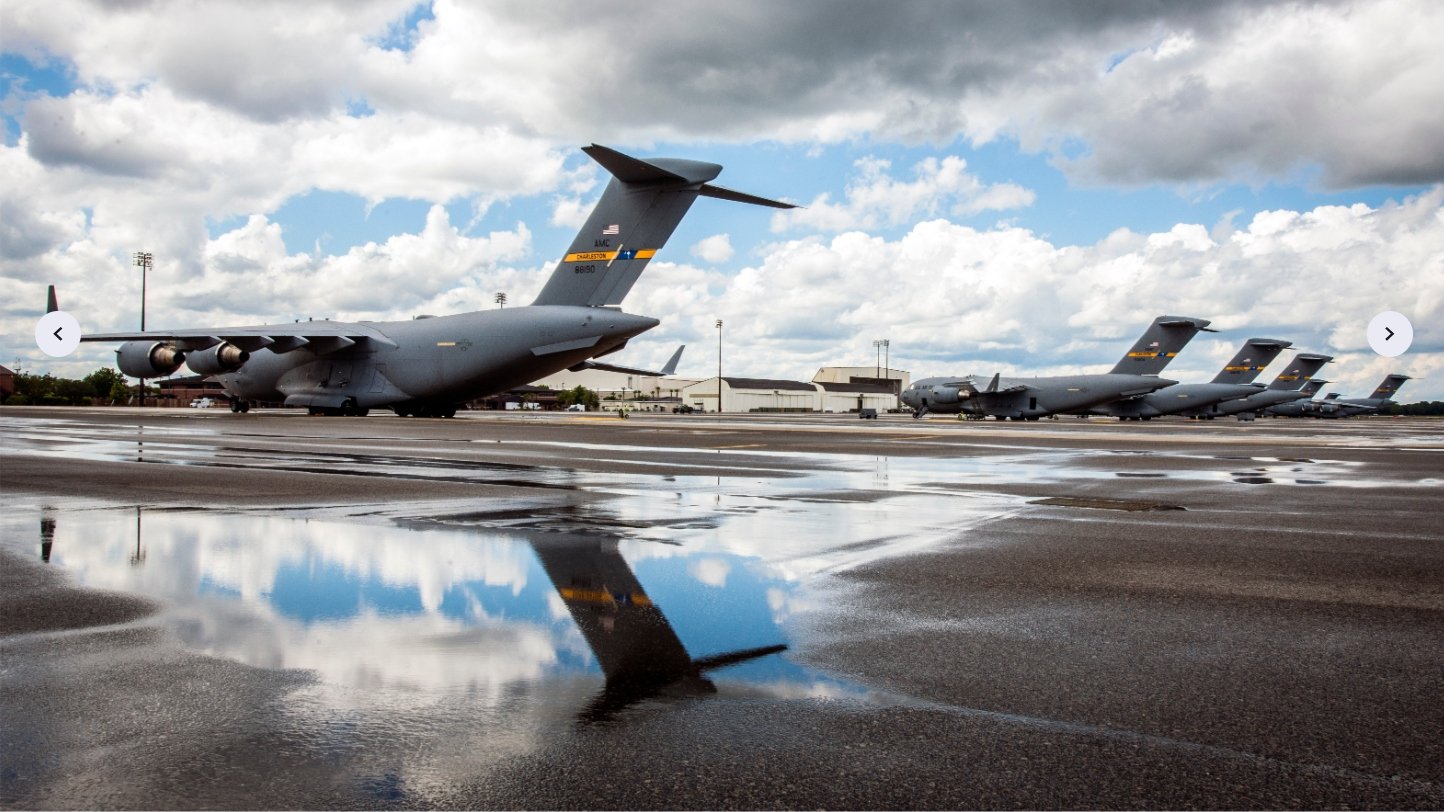
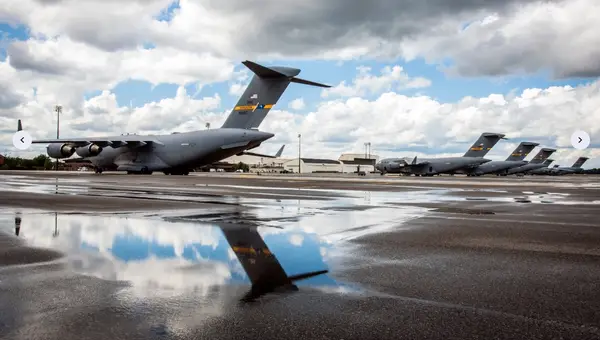
Today, the base serves a population of over 90,000 and operates the military's largest fleet of C-17 Globemaster III aircraft. Below, we are taking a closer look at the base's history and where it stands today.
By the Numbers: Joint Base Charleston Today
Today, Joint Base Charleston (now Joint Base Lindsey Graham) is one of the most complex bases on the East Coast. As a joint base, the installation has a significant role, integrating resources across multiple branches and federal agencies. Below is a look at how the base operates today.
A Renaming This Fast is Unusual, and It's Reopening an Old Fight
What makes this story more than a straightforward tribute is timing and precedent. Most base-naming or renaming efforts (including the Pentagon's own 2023 overhaul of Confederate-named installations) have unfolded over months or years, often through naming commissions, congressional input or, in Charleston's case before now, direct local negotiation.
That last part is what Sen. Sutton is pointing to. In 2019, a campaign to rename Charleston International Airport after the late Sen. Ernest "Fritz" Hollings (another towering South Carolina political figure with deep ties to the base and the broader Charleston community) did not result in the airport itself being renamed. Instead, local officials brokered a compromise: only the terminal building carries Hollings' name.
Sutton, an Air Force Reserve officer who represents North Charleston in the state Senate, argues Graham deserves comparable recognition but says converting the entire joint base's name by Pentagon memo skips the kind of community buy-in that shaped the Hollings outcome.
"A more fitting tribute would be naming the new Coast Guard facility in North Charleston after Senator Graham, especially given his recent work to secure major federal investment for the Coast Guard mission here," Sutton told The Post and Courier.
"That would honor his legacy without erasing Charleston's military tradition."
That framing- honor him, but don't erase 80-plus years of local naming history in a single memo- gives the story a genuine local-versus-federal tension that's largely absent from the coverage so far, most of which has focused on confirming the renaming and cataloging tributes.
A secondary, related angle: Graham's fingerprints are already on the base twice over. He was described as instrumental in the 2010 push that created Joint Base Charleston in the first place, and just two months before his death, he had secured the funding for the very Coast Guard upgrades Sutton wants named after him instead.
That makes this less a story about honoring an outside dignitary and more one about a lawmaker whose legislative record is literally poured into the base's concrete, which cuts both ways in the argument over what, exactly, should carry his name.
Could the Joint Base Itself be Coming Apart?
A second, much larger structural issue lurks behind this whole renaming controversy: whether "Joint Base Charleston" will continue to function as a joint base at all.
Policy discussions currently ongoing in the Pentagon raise the possibility that Joint Base Charleston may be headed toward a future where it will once again be a combination of an Air Force installation and a Navy-operated Naval Weapons Station. Dismantling the joint base would represent an infinitely more fundamental change than merely renaming it, as it would entail re-separating the base support functions, budgets, security, housing, and chain-of-command that have been combined for sixteen years.
In Washington, the question of disassembling joint bases is increasingly discussed as an option to consider. The February 2026 GAO report concluded that, sixteen years after the DoD consolidated 26 installations into 12 joint bases, the process has failed to produce the promised cost savings. The report noted that "nearly all joint bases received less funding than needed to sustain their facilities," and that the DoD cannot clearly track how facility investment is split between the military branches sharing each base.
This data has come after many years of criticism coming from inside the services. In 2018, for example, senior Army installations officials argued publicly that joint basing had failed to produce promised cost savings, warning that folding installations from different service cultures together erodes the effectiveness of each branch.
If Joint Base Charleston is genuinely on a path to un-merging, it raises an obvious complication for the current renaming effort: Would "Joint Base Lindsey Graham" still be a joint base by the time the name change is complete, or would the Air Force side alone carry Graham's name while the naval footprint reverts to separate management?
What Are Officials Saying?
The news of Senator Graham’s passing drew tributes from across state and national leadership.
Troy Meink, Secretary of the Air Force, in a July 27 memo to Air Mobility Command explained that renaming the base "honors Senator Graham's decades of distinguished service to the United States Congress and the United States Air Force," adding that his "steadfast advocacy was instrumental in modernizing our military infrastructure and enhancing aviation security, ensuring that Joint Base Charleston remains as one of America's premier military installations."
Alan Wilson, South Carolina Attorney General and the Republican nominee for governor, in a July 28 social media post wrote,
"Today's announcement to rename Joint Base Charleston in honor of Senator Lindsey Graham is a fitting tribute to a man who dedicated his life to serving our nation and state. From his service in the Air Force to his years in Congress and the U.S. Senate, Lindsey answered the call to serve with honor. His legacy will live on for generations."
Ed Sutton, South Carolina state senator (D-Charleston), in comments to The Post and Courier and on X, raised the objection to the renaming's speed and process detailed above. Gov. Henry McMaster, in a statement following Graham's death, described Graham as "irreplaceable," adding, "We shall not see his likes again."
President Donald Trump, in a Truth Social post the day Graham died, stated,
"Senator Lindsey Graham, one of the greatest people and Senators I have ever known, is dead! He was always working, and was a true American Patriot."
Sen. Tim Scott, R-S.C., on Fox News Sunday said,
"The hole that Lindsey Graham left in the Senate cannot be filled. It will need many of us to step up to the plate and take on the responsibilities that he had from a global perspective."
The directive to rename Joint Base Charleston reflects Senator Graham’s decades of service to the military and South Carolina. While statements from leaders emphasize his legislative impact, the renaming order that came quickly after his passing has prompted much discussion about the process of renaming historical and governmental sites.
Continue Reading
Welcome to Joint Base Lindsey Graham! Everything You Need to Know About Your New Duty Station

30+ Things to Do Near Joint Base Lindsey Graham in North Charleston, Goose Creek, and Summerville!
Join the Conversation

Tracy Fuga
Military Spouse & Military Lifestyle Writer at MyBaseGuide
Tracy Fuga is a San Diego-based writer, editor, and marketing professional with nearly two decades of experience in content creation and communications. A former editor at MARCOA Media — the origina...
Tracy Fuga is a San Diego-based writer, editor, and marketing professional with nearly two decades of experience in content creation and communications. A former editor at MARCOA Media — the origina...
Expertise
- military spouse lifestyle
- small buisness
- entrepreneurship
SHARE: