Fort Bragg Therapy Dog Named Sapper Wins USO's Top Honor

A Soldier walks into the USO at Fort Bragg and heads straight for the therapy dog without hesitation. There’s no small talk, no need to explain why he came or what he is looking for. He reaches Sapper and pauses there, briefly stepping out of the pace that defines everything else around him. When he does speak, it’s straight to the point, “I come just for Sapper,” he said. “It’s nice stress relief.” The moment is short, but it carries enough meaning to explain why the USO named Sapper its Canine Volunteer of the Year, a recognition that captures only a fraction of what led to it.
Fort Bragg is home to tens of thousands of Soldiers, many cycling through training and deployment at any given time. Sapper, an American husky, has logged more than 500 volunteer hours alongside his handler, Mike D’Arcy.
Therapy dogs like Sapper are trained to provide calm, physical presence, often working alongside volunteers to support service members outside clinical settings. His work doesn’t center on a single location or a fixed group. Instead, it revolves around the same spaces Soldiers already occupy, where routines overlap with stress, transition, and long stretches of time that rarely slow down.
The hours matter, but the consistency of the pattern behind them matters more. He is present repeatedly, in ways that don’t require pre-planning or formal structure, and that consistency is what defines his role.

Where Sapper Shows Up
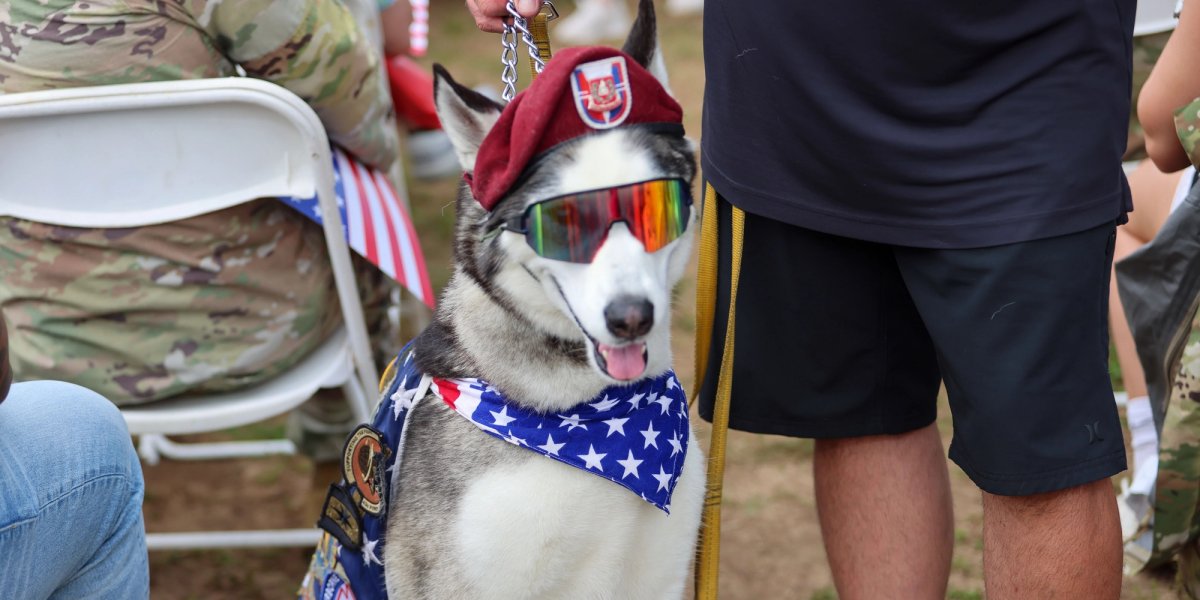
Around base, Sapper’s easy to spot wearing sunglasses, a maroon beret, and a USO bandana. He shows up daily at the USO, but he doesn’t stay there. Sapper visits schools, libraries, makes hospice visits, and attends community events.
He’s been doing this since he was about a year old. Some visits happen before deployments, when uncertainty sits just beneath the surface. Others happen during routine days that feel heavier than they appear to be from the outside.
There’s no single type of interaction that defines his work. Some Soldiers stop and stay for a moment, others pass through more quickly, and many return to see him again. Sapper is there again the next day, and the day after that. Over time, that familiarity builds its own kind of trust.
Why Him
Sapper didn’t earn this recognition because of a single defining moment or a unique capability that separates him from other therapy dogs on paper.
What distinguishes his work is the combination of scale and consistency. More than 500 hours across a high-tempo installation is sustained contact. His roving presence is not tied to one type of interaction, which allows that contact to reach a broader range of service members and situations. He was selected through a public vote, one of five finalists, but the reason he was honored showed up long before that.

On a base like Fort Bragg, where operational tempo leaves little room for pause, consistency makes a difference. Soldiers encounter him in the course of their day, sometimes intentionally, sometimes by chance.
Those repeated encounters create something that is not easily measured but is clearly recognized by the people who spend any amount of time with him. The decision to stop, even briefly, becomes its own signal of value.
Where Recognition Falls Short
What stands out about Sapper is how quickly the interactions with him reset the moment. Rank doesn’t enter the room, conversation isn’t required, and for a few minutes, the pace of life shifts without anyone having to say anything.
That kind of access comes from a familiar presence that asks for nothing in return. Soldiers don’t have to perform, engage, or articulate what they’re carrying. They just meet him where they are, and from there, Sapper anchors them with enough steadiness to keep them from drifting too far off balance, even in a place that rarely slows down.
Sapper has been doing this since he was about a year old, long before the award and long before anyone outside the base knew his name. The recognition puts a frame around it, but the work he’s known to put in never needed one. It shows up the same way each time. A Soldier who wasn’t planning to stop by does. Someone who has seen him before comes back without being asked. The interaction is brief, and then it’s over, but the effects are long-lasting, far beyond the time spent together.
Continue Reading
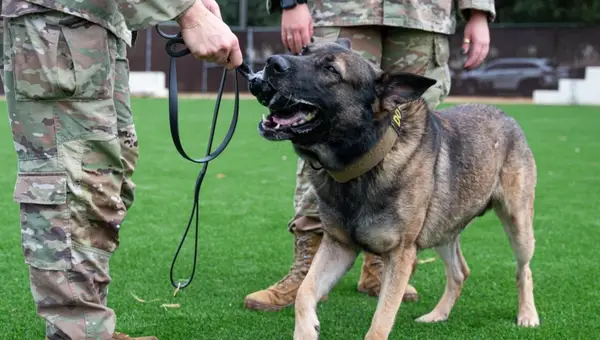
Peterson SFB Honors K-9 Veterans Day with Military Working Dogs
Join the Conversation

Natalie Oliverio
Veteran & Senior Contributor, Military News at MyBaseGuide
Natalie Oliverio is a Navy Veteran, journalist, and entrepreneur whose reporting brings clarity, compassion, and credibility to stories that matter most to military families. With more than 100 publis...
Natalie Oliverio is a Navy Veteran, journalist, and entrepreneur whose reporting brings clarity, compassion, and credibility to stories that matter most to military families. With more than 100 publis...
Credentials
- Navy Veteran
- 100+ published articles
- Veterati Mentor
Expertise
- Defense Policy
- Military News
- Veteran Affairs
SHARE: