AI Warfare: What Autonomous Weapons Could Mean for America's Military & How Congress is Reacting

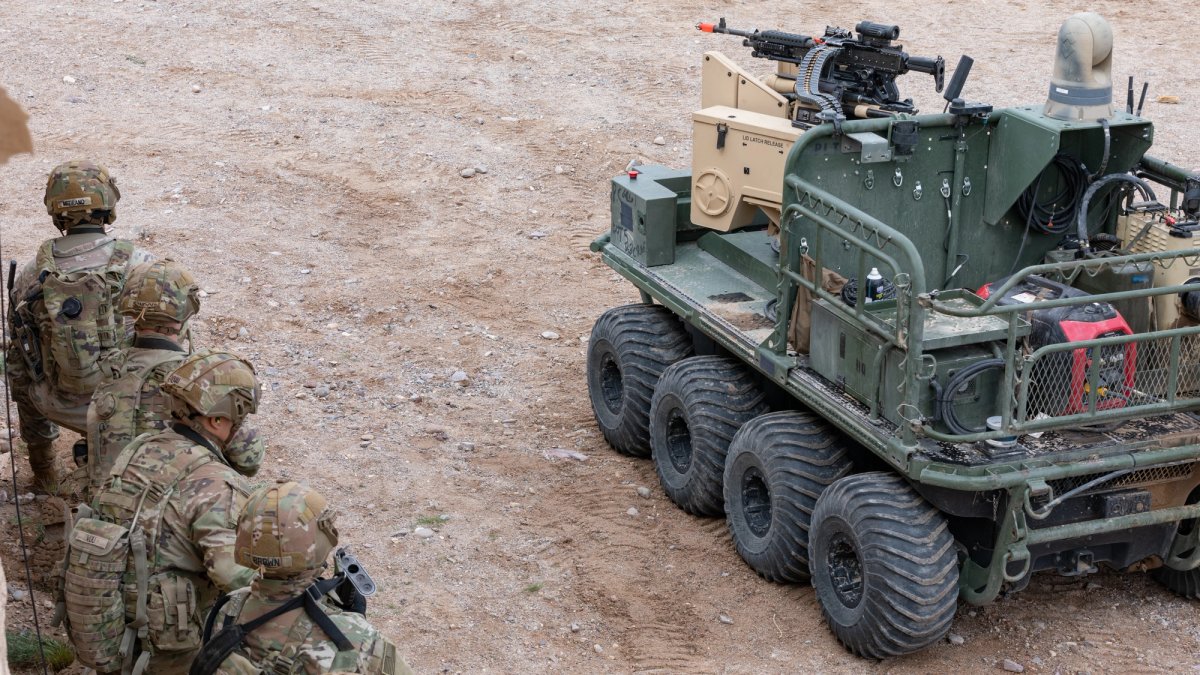
Artificial intelligence is changing the ways nearly every person, nation, business, and organization goes about daily life, and the US military is no exception. From analyzing intelligence and planning missions to operating drones and identifying potential targets, AI is increasingly becoming part of the way America's armed forces prepare for and conduct military operations. But as the tools of this technology become increasingly capable, an important question is emerging: How much decision-making should be left to a machine when the consequences could mean life or death?
That question is becoming increasingly important in Washington. Members of Congress from both parties are considering new limits on how the military can use AI, particularly when the technology is involved in targeting, operational planning, or autonomous weapons. This debate is not simply about futuristic "killer robots." AI is already capable of performing many tasks that once required teams of human analysts and operators. The more sophisticated those systems become, the more important it will be to determine where human responsibility begins and where machine autonomy should end.

AI Isn't the Same Thing as an Autonomous Weapon
One of the biggest challenges in discussing “military AI” is that the phrase is used to cover a wide array of different things. An AI system might help military personnel sort through intelligence, identify patterns in satellite imagery, predict equipment failures, or recommend possible courses of action. In those situations, a human remains responsible for deciding what to do with the information. An autonomous weapon is something different.
The Congressional Research Service (CRS) explains that the Defense Department's policy distinguishes between autonomous and semi-autonomous weapon systems, with autonomous systems capable of performing functions such as selecting and engaging targets without further human intervention after activation.
Semi-autonomous systems, by contrast, can perform certain functions independently while remaining subject to human control. That distinction matters because autonomous technology, even autonomous technology employed by the military, does not necessarily mean a machine is independently deciding whom to kill.
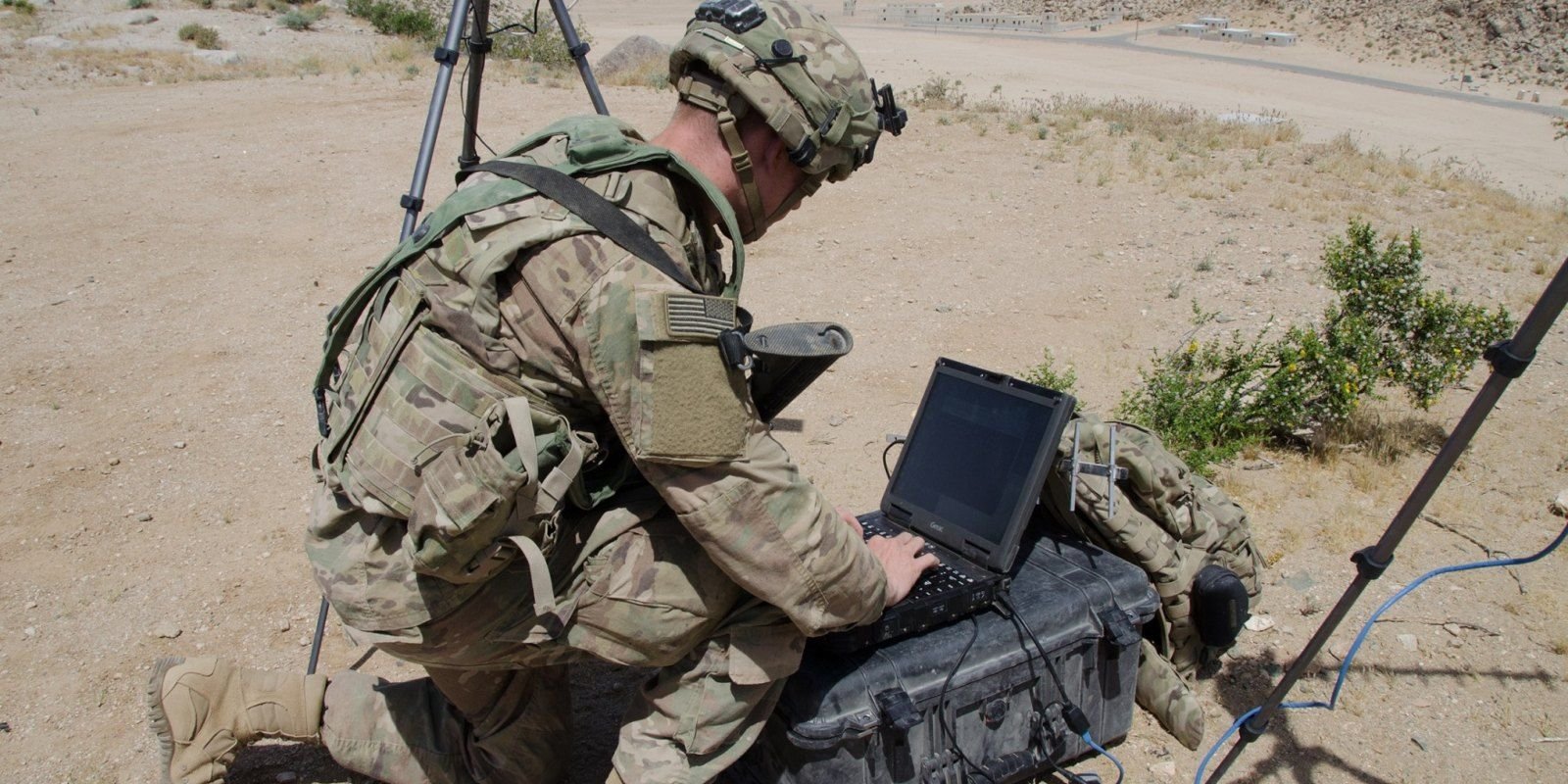
In fact, many of the military applications attracting attention today are much less dramatic. AI systems and software can help a service member process information faster, identify objects, navigate an unmanned vehicle, or determine which pieces of intelligence deserve closer examination. The concern is what happens when AI moves further down the chain, from helping humans make decisions to actually making some of those decisions itself.
The US Military’s Current Rules for Autonomous Weapons
The Pentagon is not starting from scratch. The Defense Department's Directive 3000.09, first issued in 2012 and updated in 2023, establishes policies governing autonomous and semi-autonomous weapon systems. The directive requires covered systems to allow commanders and operators to exercise appropriate levels of human judgment over the use of force.
"Autonomous and semi-autonomous weapon systems will be designed to allow commanders and operators to exercise appropriate levels of human judgment over the use of force."
The policy also establishes requirements concerning the design, testing, evaluation, and deployment of autonomous and semi-autonomous weapon systems. Among other things, they are expected to operate within intended parameters and to allow the human operators or commanders overseeing them to intervene whenever they deem necessary. That means the Pentagon's existing policy does not simply envision an autonomous weapon being switched on and then left completely on its own.
There are also additional layers of senior-level review for autonomous and semi-autonomous weapons before development and fielding. Congress has separately required the Defense Department to notify lawmakers about changes to the directive and to provide reports concerning the approval and deployment of lethal autonomous weapons. But the United States does not currently have a blanket prohibition against developing lethal autonomous weapons.
And while the CRS documents referenced in this article note that the United States has not publicly acknowledged possessing fully autonomous lethal weapons, existing policy regulates rather than outright prohibits their development and use. That distinction is important: the United States is regulating autonomous weapons while potentially continuing to explore the technology.

The argument moved upstream
For years, the debate fixed on the final use of force. The proposals now before Congress reach further upstream — seeking to govern AI’s role not only in that last step, but in the planning and targeting decisions that lead to an engagement.
STEP 01
Collect
Sensors and sources gather raw data from across the battlespace.
STEP 02
Analyze
Software fuses and interprets that data into a picture of what’s there.
STEP 03
Plan the mission
Objectives become a concrete course of action.
STEP 04
Nominate the target
Specific targets are identified and put forward for approval.
STEP 05
Select and engage
A target is chosen and force is applied against it.
UNDER REVIEW · Steps 01–04
Congressional proposals would extend limits to AI-assisted planning and targeting — steps a human still signs off on, but does not necessarily originate.
ALREADY GOVERNED · Step 05
DoD Directive 3000.09, issued 2012, updated 2023.
“There is always a human responsible for the use of force. Full stop.
Kathleen Hicks, then-Deputy Secretary of Defense
AUTONOMOUS
Can select and engage targets without further human intervention after activation.
SEMI-AUTONOMOUS
Performs certain functions independently while remaining subject to human control.
BLANKET U.S. BAN
None
No blanket U.S. ban on lethal autonomous weapons currently exists.
GOVERNING DIRECTIVE
3000.09
DoD Directive on autonomy in weapon systems — issued 2012, updated 2023.
BIPARTISAN BILL
H.R. 9729
Human Authority over Autonomous Weapons Act, introduced July 2026.
Congress Wants a Bigger Role
That existing framework is increasingly attracting congressional attention. In June, Air & Space Forces Magazine reported that lawmakers were considering expanding restrictions on autonomous weapons to include AI-assisted mission planning and targeting. Congressional proposals have sought to address AI's role not only in the final use of force but also in the planning and targeting decisions that can lead to an engagement.
That represents an important shift. The question is no longer simply whether a machine can independently pull the trigger. Lawmakers are also considering what happens when AI helps determine where a military should strike, what targets should be considered, or how an operation should be conducted.
An AI system could theoretically remain under human supervision while still having enormous influence over a military decision. That creates a difficult problem. If an AI system analyzes thousands of pieces of information and recommends a target, the human commander may technically make the final decision. But how much influence did the machine have over that decision? And what happens if the AI's recommendation is wrong?
Those questions become especially complicated when AI systems are difficult for their operators to fully understand, as the mysterious ways they can function are often referred to as “the black box problem.”
Paul Scharre, a former Defense Department official who helped draft the military's original autonomous weapons policy, highlights this tension,
"AI is being used to sift through satellite images and drone video feeds, and that helps militaries then better understand what's happening on the battlefield, make decisions faster, and then target the enemy faster and more accurately.
There is no question that the technology will... make this possible, and militaries will have to face the question of whether to cross this line and delegate lethal decisions to machines."
Concerns about the reliability, explainability, and accountability of AI-assisted military decision-making are among the issues being raised as Congress considers new rules for military AI. For the military, that creates a balancing act between speed and accountability.
Why the Military Wants AI
There are good reasons the Pentagon is interested in the technology. Modern warfare produces enormous quantities of information. Satellites, aircraft, drones, sensors, communications systems, and intelligence organizations can generate more data than human personnel can reasonably examine on their own with requisite speed.
AI can potentially help service members process that information far faster. Autonomous systems can also operate in environments where communications with human operators are unreliable or impossible. The CSR identified the ability of autonomous systems to operate in communications-degraded or communications-denied environments as one potential military advantage.
That capability could save lives. An unmanned aircraft or ground vehicle can enter an area that would otherwise put a human crew operator or crew at risk of injury and death. Autonomous platforms can potentially remain on station for longer periods without exposing personnel to enemy fire. AI can also help detect threats that might be missed by an exhausted operator making an all-too-human error. In that sense, the attraction of autonomous technology is not difficult to understand. The military wants machines to perform dangerous tasks so that human beings do not have to.
But removing a human from physical danger does not necessarily mean removing humans from the chain of responsibility. As Deputy Secretary of Defense Kathleen Hicks recently stated regarding the Pentagon's commitment to accountability,
"As I've said before, our policy for autonomy in weapon systems is clear and well-established. There is always a human responsible for the use of force. Full stop."
The Human Element Remains Essential
That is where the current congressional debate becomes particularly significant. In July, a bipartisan group of lawmakers introduced the Human Authority over Autonomous Weapons Act, legislation intended to establish a statutory requirement for meaningful human control over the use of lethal force by autonomous weapons. The basic idea is straightforward: a machine should not have sole authority to decide that a human being should be killed. That principle enjoys support from across the political spectrum, even as lawmakers continue to debate exactly how it should be implemented. The bipartisan legislation is part of a broader congressional effort to establish legal guardrails for military AI and autonomous weapons.
The debate also extends beyond the battlefield, as other proposed legislation has sought to establish restrictions around military AI in areas including lethal targeting and other high-consequence applications. Their continuing focus on this issue demonstrates that Congress is trying to catch up with technology that is developing faster than traditional military rules and standards were designed to anticipate.
That does not necessarily mean lawmakers want to stop the military from using AI. Instead, the emerging debate is largely about establishing boundaries.
What the Future of Military AI Could Mean for Service Members
For today's service members, the rise of AI may change not just the way they operate but the very nature of their jobs and MOS’s just as dramatically as previous technological revolutions did. The military has always adapted to new technology eventually, from the adoption of stirrups, which revolutionized mounted warfare, to the expansion of the internet and its information sharing and communication capabilities.
AI could represent another major transformation, but this time the technology is not simply a new piece of equipment. It can potentially perform tasks that traditionally required human judgment. That could change what’s expected of Soldiers, Sailors, Marines, Airmen, Guardians and others in the service and employment of the DoD.
Some specialties may become increasingly automated. Others could become more technical. More and more service members may need to understand how AI systems work, recognize when those systems are producing unreliable information, and know when human intervention is required. In other words, the future military may need fewer people performing certain repetitive tasks while requiring more people capable of working effectively alongside intelligent machines.

The Future May Be Human and Machine, Not Human Versus Machine
The future of the US Armed Forces’ use of AI probably isn't a swarm of completely independent robots replacing American service members on the battlefield. Far more likely is a military in which humans and machines increasingly work together.
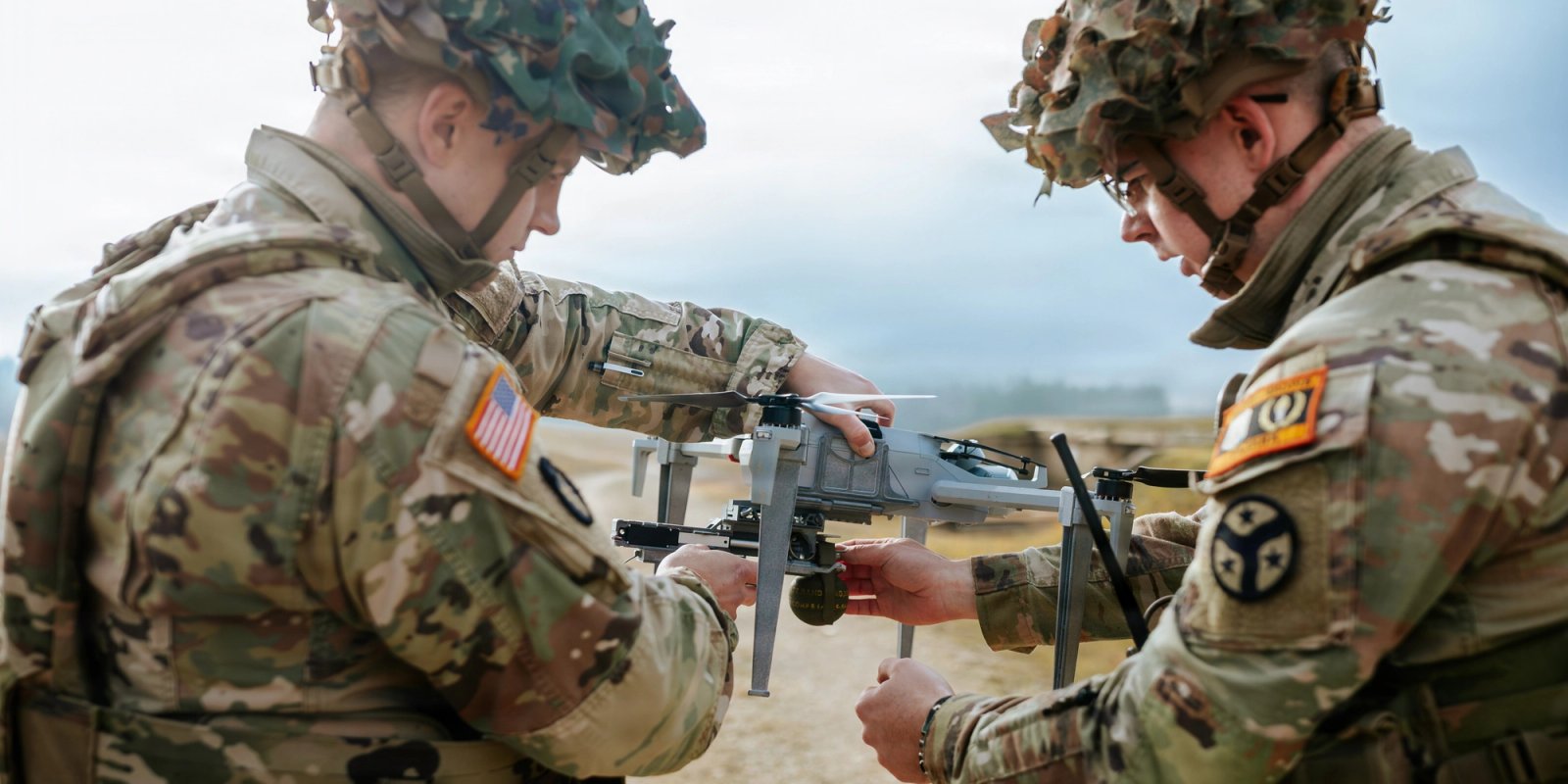
A drone may scout an area while a human decides what to do with the information. An AI system may identify a potential target while a commander determines whether an engagement is lawful and necessary. An autonomous vehicle may transport supplies through a dangerous environment while human personnel supervise its mission. The machines may become faster, more capable, and more independent.
But the core of American military operations and decision-making will likely remain human because of one important question above all else: Who is responsible when something goes wrong?
That is why the debate over autonomous weapons is about much more than artificial intelligence. It is about accountability, judgment and the role of human beings in war. The technology will continue to advance, and America's military will surely continue looking for ways AI and autonomous systems can protect service members, improve decision-making and give commanders an advantage over increasingly sophisticated adversaries.
The challenge for the United States, its lawmakers, and the Pentagon will be ensuring that technological superiority does not come at the expense of human responsibility. For the service members who ultimately operate alongside these systems, that distinction could define the battlefield of the future. AI may change how America's military fights. But deciding when, where, and why force should be used will remain a question that demands something machines cannot provide: human judgment.
Continue Reading
Army TITAN Program Will Use AI To Blast Enemies From Afar
The Drone Wars and How the U.S. Is Responding

Army Embraces VR and AI for Advanced Training Readiness
Join the Conversation

Paul Mooney
Veteran & Military Affairs Correspondent at MyBaseGuide
Paul D. Mooney is an award-winning writer, filmmaker, and former Marine Corps officer (2008–2012). He brings a unique perspective to military reporting, combining firsthand service experience with exp...
Paul D. Mooney is an award-winning writer, filmmaker, and former Marine Corps officer (2008–2012). He brings a unique perspective to military reporting, combining firsthand service experience with exp...
Credentials
- Former Marine Corps Officer (2008-2012)
- Award-winning writer and filmmaker
- USGS Public Relations team member
Expertise
- Military Affairs
- Military History
- Defense Policy
SHARE: