The Ultimate Guide to Becoming an Army Sniper

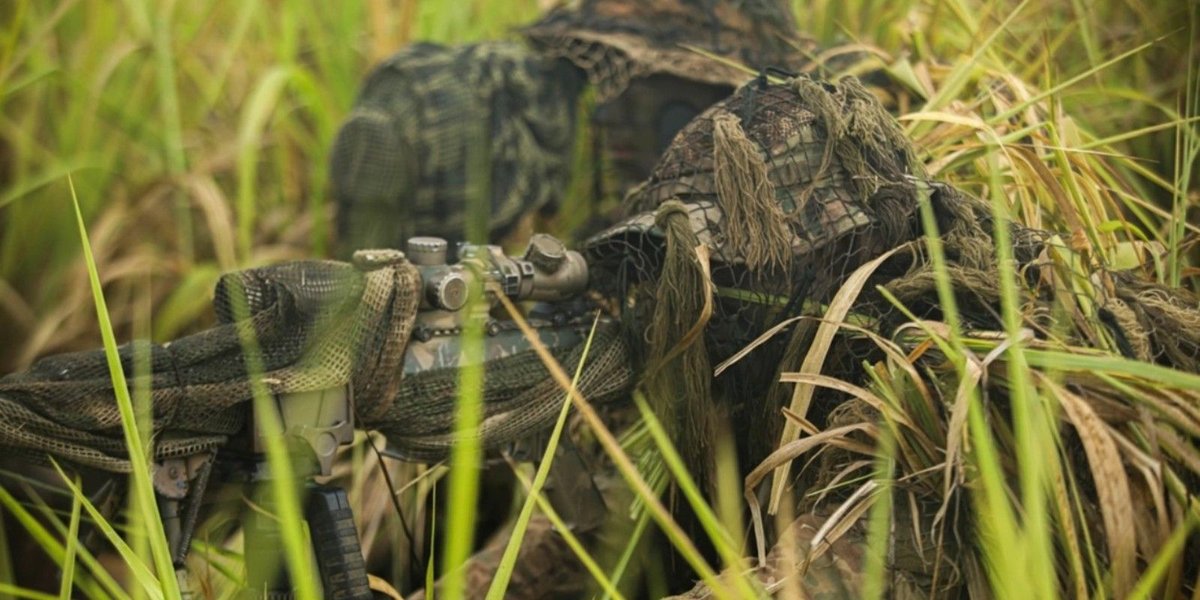
While anyone who sets foot on a battlefield or in a warzone will face countless dangers worthy of fear or respect, there are a few individuals worthy of those feelings, as those men and women live by the motto “One Shot, One Kill." It is those individuals who, with a rifle and a scope, can pick off targets with uncanny precision from hundreds, even thousands, of yards away. Singular people trained to dole out death unseen, unheard, and without warning. And the United States Army has some of the deadliest snipers in the world, thanks to the grueling and highly selective training they must go through: the United States Army Sniper Course at Fort Benning, Georgia.
Over the course of 29 days, those accepted into the course learn what kind of Soldiers US Army snipers need to be: “adaptive, critical thinkers, armed with the technical, tactical, and logistical skills necessary to plan and execute precision long-range, direct rifle fire against enemy targets while serving as a member of a Sniper Team.”
Anyone interested in joining the ranks of some of the US military’s sharpest of sharpshooters should know the requirements it takes to even get into this school (while the course mainly exists to train Soldiers how to become snipers, it is open to eligible personnel from all branches of the Armed Forces and often welcomes them as students). This is what it takes to attend this elite school of marksmanship.

How to Get Into the United States Army Sniper Course
1. Be a Currently Serving Soldier
If, by chance, you are reading this and are not already an enlisted member of the US Army, Army Reserves, National Guard, or other branch of the armed forces, then your first step is to join up.
2. Attain a Military Occupational Specialty (MOS) in an Eligible Field
Those with an MOS of 11B (Infantry), 19D (Cavalry Scout), or 18 (Special Forces) are the only Soldiers who can currently take a crack at the Sniper Course.
3. Score High Enough on the ASVAB
It’s widely reported that any applicant must have scored at least 100 points in the General Technical (GT) portion of the Armed Services Vocational Aptitude Battery (ASVAB), though that stipulation does not seem to exist on the school’s formal list of requirements. Still, the higher score you have, the better!
4. Reach a Minimum Rank but Don’t Surpass the Maximum Rank
Spots in the Army’s sniper school are open only to enlisted personnel, specifically those who have risen to the rank of at least E3 but no higher than E6.
For Soldiers specifically (the bulk of applicants), that means men and women from Private First Class to Staff Sergeant.
5. Meet Vision Requirements
It stands to reason that, if you’re going to shoot people from hundreds or even thousands of meters away, you need to have average or better vision.
Applicants must have 20/20 eyesight (if you need glasses for this, no sweat, you’re still eligible) and pass a red/green colorblindness test.
6. Possess the Exemplary Rifle Marksmanship
If you want to serve as a sniper, you’ve got to know how to handle a long gun even better than the average Soldier.
There’s no specific bottom line for this particular metric, but chances are the better shot you are with a standard rifle or carbine, the more likely you are to become a sniper.
7. Be in Good Physical Shape
Potential snipers are expected to be at the head of the pack when it comes to physical fitness. Moreover, applicants must have successfully completed an Army Fitness Test (AFT) within 30 days of their Sniper Course class’s start date.
Which Military Branch Is Right for You?
Answer 10 questions to discover which branch of the U.S. Armed Forces best matches your personality, interests, and goals.
10 questions • Takes about 2 minutes
8. Have a Clean Service Record
As getting into sniper school means a chance at joining the elite of the elite among riflemen, only those with an unblemished record are likely to be accepted.
So, keep your nose clean if you aspire to achieve the title of US Army sniper.
9. Pass a Psychological Examination
Every job in the military is, in its own way, a high-pressure one. But some are obviously much more high-pressure than others.
Being a successful sniper requires near-superhuman levels of patience and focus. A clean bill of mental health is just as important as being in tip-top physical shape for this line of work.
Applicants must undergo a full psychological exam from an authorized psychologist within one year of their class’s start date.
10. Possess Proper Security Clearance or be Eligible to Obtain It
As someone who will wind up operating at the front lines, if not beyond them, a potential Army sniper needs to have Secret Security Clearance. Obtaining that, or at least being eligible and willing to undergo the lengthy and involved screening process, is a must for any would-be sharpshooter.
Remember, these are merely the prerequisites for admission to the United States Army Sniper Course. Once you get in, you have to actually make it through the highly selective training program to earn the designation as an Army sniper.
You have to prove beyond a shadow of a doubt that you have the patience, diligence, and skills to look down the scope of a high-powered rifle, carefully squeeze the trigger, and eliminate high-value targets with a single bullet.
Because that’s what it takes to qualify as someone worthy of calling themselves a US Army sniper.
(Final Note: potential Sniper Course applicants that fail to meet some of these requirements can submit waivers through the proper chain of command. Check the official website for further information.)
Continue Reading
The Ultimate ASVAB Study Guide for Recruits
Join the Conversation

Paul Mooney
Veteran & Military Affairs Correspondent at MyBaseGuide
Paul D. Mooney is an award-winning writer, filmmaker, and former Marine Corps officer (2008–2012). He brings a unique perspective to military reporting, combining firsthand service experience with exp...
Paul D. Mooney is an award-winning writer, filmmaker, and former Marine Corps officer (2008–2012). He brings a unique perspective to military reporting, combining firsthand service experience with exp...
Credentials
- Former Marine Corps Officer (2008-2012)
- Award-winning writer and filmmaker
- USGS Public Relations team member
Expertise
- Military Affairs
- Military History
- Defense Policy
SHARE: