The Air Force is Testing AI for Promotion Boards — What This Means for Your Career
The Air Force is experimenting with artificial intelligence to streamline its talent management and promotion board process - a quiet but significant shift that reflects both a broader Pentagon push toward AI integration and a candid admission from the service's top enlisted leader that the Air Force has never been particularly good at putting the right people in the right jobs.
Chief Master Sergeant of the Air Force David Wolfe disclosed the experiment during a May 8 appearance at a Military Officers Association of America forum. Wolfe said the Air Force’s newly formed "AI Action Team" stood up last December within his first weeks on the job. One of the projects the team is currently running tests on is automating background processes in promotion board screening and ranking for both enlisted and officer boards.
How AI Will Be Used in the Boardroom
The goal, Wolfe was careful to note, is not to let an algorithm pick who gets promoted.
The service is "not letting AI pick, but automating the processes that happen in the background so that when the human looks at it, it's easy to see, easy to discern, and gives us a better chance of making a really good decision."
Human judgment stays in the loop, and AI handles much of the preparation.
What does this look like in practice? Instead of making subjective leadership evaluations, the AI is being tested to handle the heavy administrative lifting. This includes:
- Pulling and compiling data from Enlisted and Officer Performance Briefs (EPBs/OPBs).
- Cross-referencing personnel files for missing Professional Military Education (PME) certificates.
- Verifying baseline eligibility criteria, such as time-in-grade and current fitness assessment scores.
What makes Wolfe's remarks notable is the candor behind them.
"We don't really do talent management in the Air Force; we do replacement management," he told the MOAA audience.
Addressing a long-standing critique of the service's personnel system, Wolfe argued that AI can cut through the process overhead so that the staff at the Air Force Personnel Center spends less time on preparation for the board, like document preparation, and possibly increase accuracy and throughput.
The AI Action Team began with 30 people - officers and enlisted, selected for talent and AI knowledge - and has grown to roughly 100. Wolfe said the team is preparing to roll out baseline AI literacy training across the force, with promotion board automation representing one of several practical experiments already underway.
The Air Force is not alone in this. The Army announced last fall it was using AI to screen out non-competitive promotion candidates, and the Navy expanded a pilot program in April that uses AI to recommend next assignments for Sailors based on skills and experience.
All three services are operating under a Pentagon mandate to accelerate AI adoption - and under the Department of the Air Force's own AI Strategy, formally released April 17, 2026, which directs the service to embed AI across operations, logistics, intelligence, and talent management.

A Process Bound by Law
Promotion boards are not administrative exercises that the Air Force can redesign at will. They are creatures of statute, governed by Title 10 of the United States Code, which specifies in considerable detail how boards must operate:
- How boards are convened.
- What records members may consider.
- The oath that board members are required to take.
- The strict confidentiality protections surrounding board proceedings.
That legal architecture exists for a reason, to protect the integrity of the process and the due process rights of every service member whose record goes before a board.
That statutory framework raises questions the Air Force will eventually need to answer publicly. If AI is touching a candidate's record before the board sees it (summarizing, ranking, or flagging) and that process is not disclosed or not explicitly authorized, a passed-over candidate has grounds for an Inspector General complaint or a Board for Correction of Military Records petition. The argument writes itself: the board did not independently evaluate the record as the law requires; an algorithm did the sorting first.
Wolfe's careful framing, that AI handles background processes and humans make decisions, may be as much legal positioning as operational description. The Air Force Judge Advocate General and Personnel Center lawyers have almost certainly been involved.
But "counsel reviewed it" and "it will survive legal challenge" are different things. As the experiment matures, the Air Force will need to demonstrate not just that humans remain in the loop, but that the loop itself still meets the statutory standard Congress intended.
Alignment with DAF Artificial Intelligence Strategy
The DAF AI Strategy frames the ambition plainly: the goal is to become an "AI-first force" that can "out-think, out-maneuver, and out-pace any adversary."
Promotion boards may seem far removed from that language, but the point is that getting the best people into the right positions is itself a readiness issue.
A promotion system that buries board members in administrative process is a system that produces suboptimal results - and in a force stretched by operational demands and personnel turbulence, suboptimal results have consequences.

How to Protect Your Record (What You Should Do Now)
Because AI will increasingly rely on structured data and keyword recognition to prepare board files, Airmen and Guardians must be proactive about their own talent management:
- Audit your PRDA (Personnel Records Display Application): Ensure every award, decoration, and PME certificate is correctly filed. An AI won't "know" you completed NCOA or SOS if the document isn't in the system.
- Write clear, precise performance statements: Avoid overly flowery language on EPBs and OPBs. Use standard, recognizable military terminology and action verbs that an automated system can easily parse and categorize.
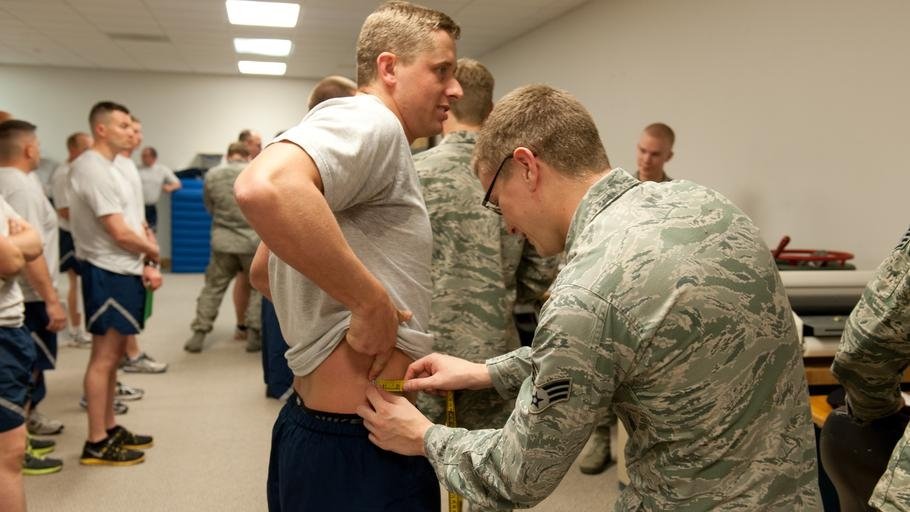
- Stay current on readiness requirements: Don't let a missing PT test or overdue dental exam be the data point that an AI flags to a promotion board as a readiness deficiency.
The Air Force Personnel Center has not issued a formal statement on the promotion board experiment, and the full scope of the AI Action Team's work remains unpublicized. But these public remarks signal that this is no longer a back-burner initiative. The Air Force is moving, and the promotion system appears to be one of the first places it intends to apply the new tools.
Continue Reading
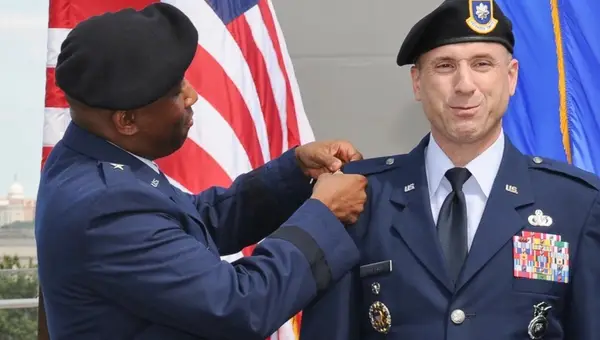
What Does It Take To Get an Air Force Promotion?
Join the Conversation

Mickey Addison
Military Affairs Analyst at MyBaseGuide
Mickey Addison is a retired U.S. Air Force colonel and former defense consultant with over 30 years of experience leading operational, engineering, and joint organizations. After military service, h...
Mickey Addison is a retired U.S. Air Force colonel and former defense consultant with over 30 years of experience leading operational, engineering, and joint organizations. After military service, h...
Credentials
- PMP
- MSCE
Expertise
- defense policy
- infrastructure management
- political-military affairs
SHARE: